I once had a friend named Monty, a man who is no longer among us. He died last month at the age of 70 while undergoing cancer treatment, catching me off guard. The chemotherapy had left him gravely weakened, yet the doctors insisted the worst was behind him and that a recovery would be underway. In truth, his body had a different verdict.
Monty and I co-led a Bible study, he a retired judge from southern Ohio, kindly and mild-mannered, forever peppering our talks with references to films and television from before I was born, and never missing a chance to indulge his anglophilia by making trips to the United Kingdom. It was hard on him when diabetes forced him to cut back on sweets. It was even harder when the cancer compelled him to cancel one of his most cherished traditions—his December birthday party that doubled as a toy drive.
Monty was a lifelong bachelor. Before his diagnosis last fall, I had been thinking I should try to be there for him as he aged, since he didn’t have children. Over roughly the past decade, we’d gather for lunch or coffee now and then, but not as often as we should have. When he fell ill, I visited him at home or in the hospital from time to time, but not as regularly as I ought to have. Who knows if I would have followed through on my plan to become part of his ongoing support system? That option no longer exists. It leaves me feeling unsettled.
I haven’t cried yet. I feel unsettled about that, too. The closest I’ve come to an emotional release is the dull ache that followed when I picked up my phone to text him some good news, only to realize Monty couldn’t read my message because he was no longer alive. I suspect he’d tell me that such experiences are all too common. Whenever self-reproach creeps in, whenever I dwell on regrets about my real or imagined failures as a friend, I try to imagine what Monty might say. He’d probably remind me that everyone grieves in their own way, that grief arrives in irregular bursts, that relitigating the past is normal but not necessarily helpful. He was always well prepared to discuss such matters.
Monty earned the reputation as the grief guide. For as long as I knew him, he led a sequence of seminars and classes designed to help people cope with the deaths of loved ones, as well as a workshop on how to support friends who are grieving. He carried a lot of wisdom and was always eager to share it. Yet I was lucky enough not to lose someone close to me for many years, so I absorbed only small fragments of that knowledge in passing. I still find irony in the fact that he’s no longer here to help me process his own passing.
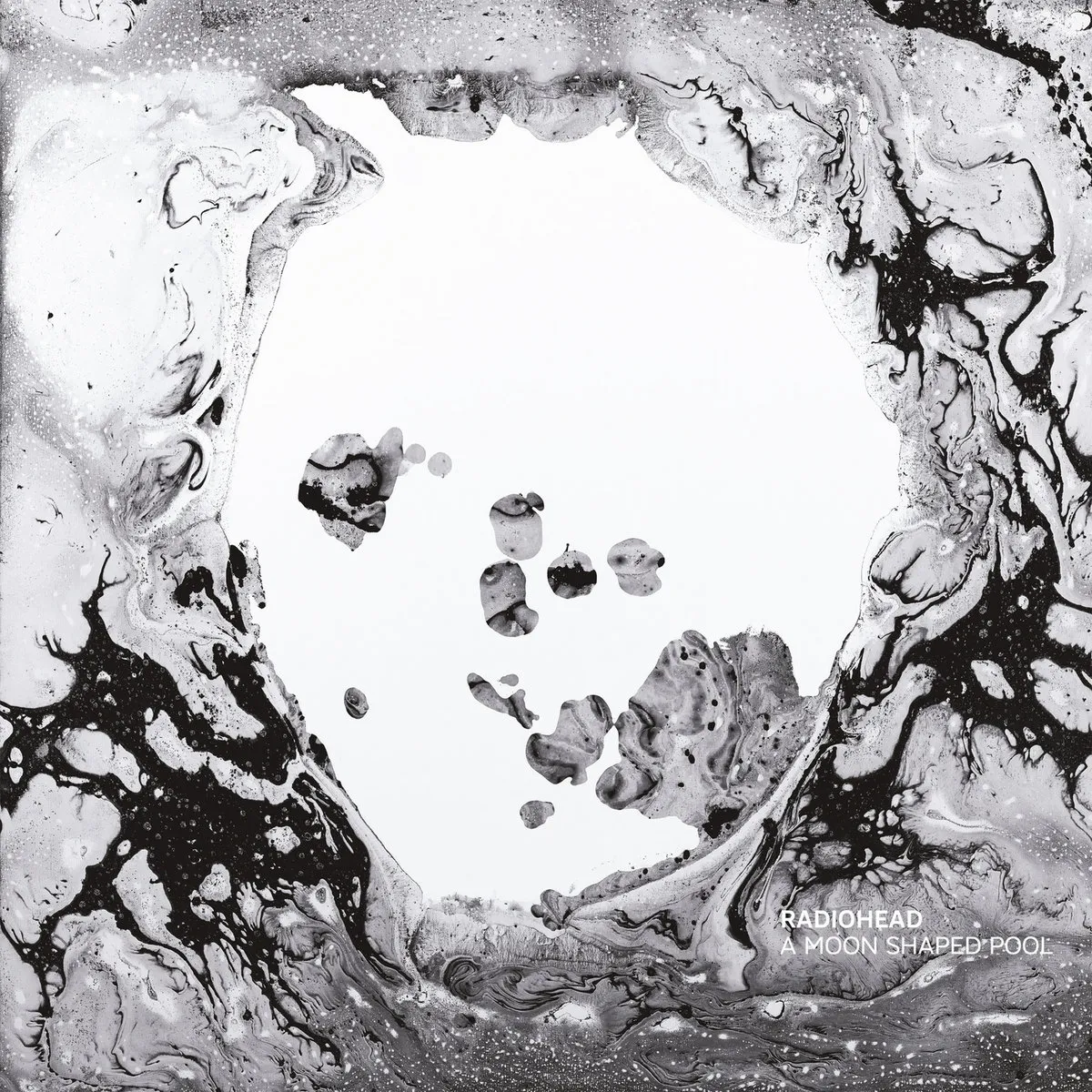
Recently I thought about Monty during a run, mulling over A Moon Shaped Pool. Radiohead’s ninth album arrived ten years ago today with a sense of finality. In writing about it on its release day, I wondered whether it might be the last thing we’d hear from the band—the final statement from the Oxford-born, childhood-friend quartet that helped define a generation, turning fragility into strength and ugliness into aching beauty, translating neuroses into sweeping epics and challenging listeners at every turn. This group, so central to my life and to millions around the world, had spent time revisiting old, unused songs from their archives, as if they were tying up loose ends. The intervals between records had grown longer, side projects more numerous. When A Moon Shaped Pool finally dropped, bassist Colin Greenwood tweeted, “Very happy, very proud we did this xx,” as if addressing a band that had already disbanded, reassembling for one last ride.
Beyond that, even by this band’s own melancholy standards, a good portion of the album sounded weary and defeated. It was easy to picture it as Radiohead mourning the end of Radiohead. Yet other kinds of grief informed these songs as well—as always, grief about geopolitics and society at large; increasingly, grief about climate change and a deteriorating planet. At the center stood a new, acute, personal grief—Yorke’s split from his partner of 23 years, Rachel Owen. “Then into your life, there comes a darkness.” “As my world comes crashing down, I’ll be dancing, freaking out.” “Different types of love are possible.” “It’s too late, the damage is done.” “You really messed up everything.” “Just don’t leave, don’t leave.”
It landed on Mother’s Day. I remember feeling annoyed at the time: my wife’s first Mother’s Day as a mother, and there I was, mid-afternoon, slipping away to my home office to work for the rest of the day, just as I had done that Christmas when Run The Jewels 3 dropped early. (Please, won’t someone think of the music critics!?) Why would Radiohead release a new album on a Sunday afternoon, I wondered? Now I suspect the timing was intentional. They don’t observe Mother’s Day on the same schedule in the UK, yet the coincidence feels pointed. The mother of Yorke’s children was leaving, and A Moon Shaped Pool had appeared.
This isn’t an album you listen to casually. Most Radiohead records require a particular mindset. You immerse yourself in them, devote your full attention, let them carry you away, or else they can gnaw at your peace of mind, like someone meltdown on the subway. Maybe with The Bends or In Rainbows you could toss them on in the background without feeling a looming shadow. With A Moon Shaped Pool, you surrender to the cloud, and that bleak music becomes, paradoxically, incredibly beautiful.
Jonny Greenwood was well into a second career as a film-score composer by 2016, and he’d been seasoning Radiohead records with orchestral splendor since Kid A. He pushed those skills here to an unprecedented degree. “Spectre,” the Bond theme Radiohead rejected, had already hinted at an album adorned with strings. Early tracks hammered the point home: the long-gestating anthem “Burn The Witch” and the new piano ballad “Daydreaming,” one rising toward the heavens like smoke, the other sinking into deeper waters, both enriched by the majesty of the London Contemporary Orchestra.
Coming after the pale, glitchy The King Of Limbs, these were among Radiohead’s most organic-sounding songs in years. They remained bleary, yet they felt like the work of a live band again, often anchored by acoustic guitar or piano. “Identikit” was a despairing jazz-rock groove, “The Numbers” a glittering folk-rock march toward the end of the world. Eerie sound design didn’t obscure the coffeehouse guitar and brushed drums at the heart of “Desert Island Disk.” Even the krautrock workout “Ful Stop,” driven by one of Colin Greenwood’s remarkable lean basslines, kept its tactile pleasures from getting lost in a fog of keyboard textures. If In Rainbows had re-centered crowd-pleasing rock, this felt like a deluxe edition of MTV Unplugged.
I wish the album hit a bit harder more often, that it rocked with a bit more force. Yet where it lacked cataclysmic oomph, it compensated with arrangements that generated their own kind of energy and internal logic. Jonny’s swirling, soaring symphonic lines heightened the drama and lent a doomed elegance to the project. At times a choir joined in to amplify the grandeur; there’s a distinct early-20th-century Hollywood aura when the chorale repeats, “Broken hearts make it rain.” And beneath the apocalyptic textures, the songs remain achingly human. The opening track proclaims, “This is a low-flying panic attack,” but “Burn The Witch” is a much older tune from a different era, when Yorke wrestled with fame and a looming dystopia. For most of these songs, the mood isn’t panic so much as desolation. It sounds like the work of a man who has been broken.
That sentiment is most evident on the closing track “True Love Waits,” arguably one of the most striking achievements in a catalog already packed with them. Traced back to 1995, it’s likely the oldest track drawn from the archives for A Moon Shaped Pool, and its transformation here is revealing. The version captured on the 2001 live album I Might Be Wrong is a solo acoustic romance, full of bright expectancy. It’s the anti-”Creep”—perhaps the most tender, sentimental song Yorke has ever performed. On A Moon Shaped Pool, those gentle strums are replaced by echoing piano that grows more tangled and dissonant as it progresses. Yorke’s old words remain, but the warmth at the song’s core has been hollowed out, leaving only a cold, empty resonance. His final plea, “Please, don’t leave,” which once carried hopeful weight, now lands as heartbreakingly sad.
At the moment, “True Love Waits” felt enough for me. A Moon Shaped Pool felt enough for me. If Radiohead had ended there, it would have been a fitting pinnacle—simultaneously triumphant and utterly downcast. Those effects deepened when Owen died of cancer a few months later, adding new emotional layers to an already harrowing body of work. It felt like a natural endpoint for their discography. The band then complicated my hypothesis by touring relentlessly for two years. In the middle of those journeys, when Rolling Stone asked Yorke whether Radiohead was finished, he replied, “I fucking hope not.” It seemed there could be more chapters to come in the band’s story.
Then Yorke and Jonny Greenwood formed a new group and promptly produced three albums’ worth of Radiohead-esque material—good to great, none matching the magnitude of this achievement—and undermined their longtime role as sharp-eyed doomsayers with a muddled stance on Israel’s attempts to destroy an entire people. In 2025, when Radiohead finally regrouped for their first shows in seven years, it felt more awkward and complicated than you’d want the return of your favorite band to feel. Or at least that was my impression from afar. Perhaps if I’d made it to Europe for one of those concerts, the whole episode would have played out differently. Perhaps their plan to tour twenty shows a year could become a treasured ritual, and they’d shake off the awkwardness and settle into a satisfying rhythm for their twilight years. Perhaps they’ll drop a surprise album so powerful that it makes all this hand-wringing seem silly.
I’m not sure I truly believed we’d go a decade without new Radiohead music. When I spent so much time trying to read the tea leaves, I hadn’t fully confronted the idea that this cherished creative force might stop creating, just as Monty’s death still hasn’t fully landed on me. But as much as I want new songs, new memories, new history with the band, the wonderful thing about recorded music is that, unlike a beloved friend, it doesn’t have to vanish. The records are still right there. The music is eternal. As long as we can revisit A Moon Shaped Pool, Radiohead can help us grieve their absence. It’s both bleak and beautiful.
Radiohead – A Moon Shaped Pool [LP]
Amazon