My circle of friends and I carved out a small haven—a private clubhouse. You’ve seen those scenes in films and TV where teens claim a space with walls peppered in old license plates, goofy graffiti, sagging couches, and a classic video game setup, and you think, “Kids don’t actually live like that.” Yet we did. We essentially commandeered my parents’ shed, and from fifteen to eighteen it became our cultural center. We were a tight nucleus, the kind you’d expect to find in a movie. We shared tastes, we knew each other inside out. It was a practical exercise in male bonding and vulnerability, to the degree that I believed for years that every guy carried that same intimate awareness of their friends’ inner lives, only to later learn that wasn’t universal.
Inside that shed, while we churned through endless rounds of Mario Party on the Nintendo 64 and got into all the typical teen shenanigans, music was our constant. Above all, it was the Red Hot Chili Peppers. Because while the shed felt like our own universe, the macro world orbits around the Chili Peppers in our adolescent little culture, a small troupe of goofy characters all united by one borderline sad fixation. It was almost cinematic, a bit of a cult, rather than a formal fraternity. What a gift to have friends you can call brothers and mean it, without needing any rite of passage or conflict to prove it.
Only years later did I realize the Chili Peppers weren’t taken seriously by everyone. They were the butt of jokes, dismissed as silly. They weren’t seen as the virtuosic shamans of funk, punk, metal, soul, and everything in between. How could anyone overlook John Frusciante’s belief that every melody already exists in the cosmos and can be drawn down by those with the right mindset? And who hasn’t watched Live At Slane Castle dozens of times?
As corny as it sounds, our shared sense of collaborative creativity, of friendship, of being a compact unit that navigates life together, found its blueprint in the way our favorite band seemed to operate. Just as I imagined all friendships in the real world, I assumed every professional band ran the same playbook, because it seemed like the Chili Peppers did—at least for a period of time.
The saga of John Frusciante within the Red Hot Chili Peppers is steeped in tragedy. He joined the band largely because their original guitarist Hillel Slovak died in 1988 from a heroin overdose—an event that Netflix’s documentary has reminded newer fans of. Slovak was only 26. He had been a brother and friend since childhood, and his loss felt like a cosmic rupture. As Flea described in the film, the sense of connection they shared while playing together seemed to vanish forever, never to return again.
Frusciante appeared destined to fill that void. He had grown up as a teenage superfAn who had essentially taught himself guitar by learning Chili Peppers songs. It felt like his mission in life. I, a devoted student of the band’s saga, also knew that he left RHCP in the mid-90s amid his struggles with addiction, apparently because the commercial success of the band unsettled him.
Yet by the time I reached an age to notice, he was back, and they released and By The Way, and everything snapped back into place—at least from my perspective, which had treated the Hillel and early John years as a research project into their back catalog. The sound was back to what it was supposed to be. The band reasserted its top tier status, headlining the planet’s biggest venues, and were poised to unveil a double album that seemed likely to be their greatest work yet.
In 2006, as I wrapped up eighth grade and stepped toward high school, it never occurred to me that the lead single “Dani California” could be viewed as cringe. I even nursed a fleeting grudge toward Tom Petty for a moment, given chatter that he might sue over a guitar motif resembling “Mary Jane’s Last Dance.” It apparently never happened. What mattered was that I would defend my Chili Peppers with the zeal of a recruit heading into battle.
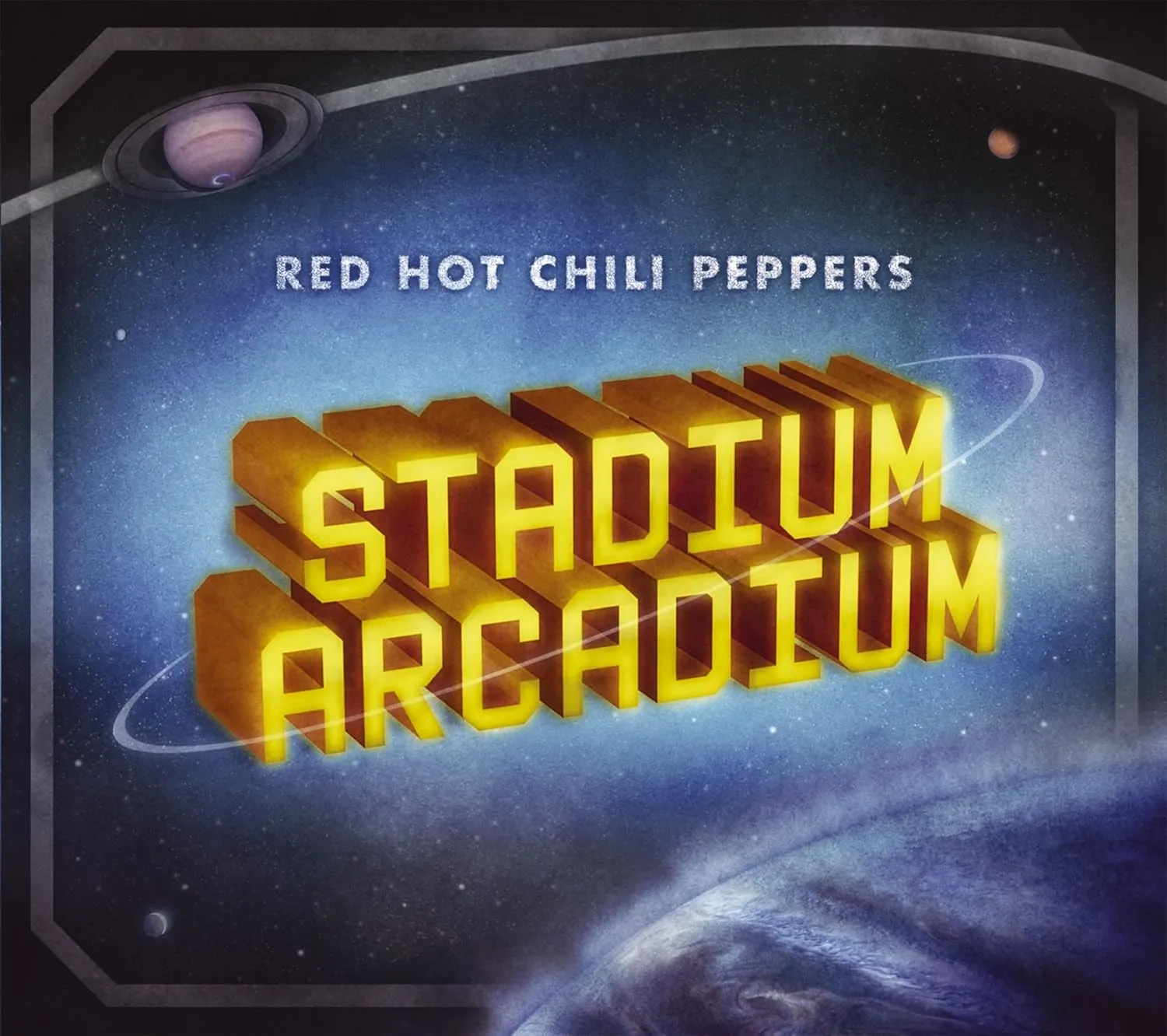
Stadium Arcadium—released twenty years ago today in Germany and four days later in the United States—certainly feels like it was tailored for a specific teenage mindset. It appeals to the part of the brain that believes it is deciphering profound metaphors and cosmic talent. The chops of Flea, Frusciante, and Chad Smith are undeniable. For all the criticism the Chili Peppers rightfully invite, the musicianship of the three of them is beyond dispute. Yet the band’s magic, or perhaps its curse, is that they’ll deck a track with a weapon-grade hook and lucid lyrics and blistering solos, then place it beside a tune like “Hump de Bump.”
Some critics might resist or dismiss “Hump de Bump,” with Flea’s trumpet and a long percussion break front and center. Yet real appreciation for the Chili Peppers requires acknowledging that “Hump de Bump” isn’t a standalone piece. It sits in dialogue with the sweeping, glimmering, potent ballad that anchors the album, and then… abruptly, the next track is titled “She’s Only 18.”
What Stadium Arcadium accomplishes is convincing many listeners to treat it with seriousness despite the silliness, because there are moments when the Chili Peppers aren’t winking. The guitar solo in “Wet Sand” stands as a peak in the band’s discography, to the point that it’s even been used in memes about family life. Bringing Omar Rodríguez-López in to play a furious guitar break on “Especially In Michigan” was enough to disrupt a high school freshman’s understanding of the instrument. The breakneck tempo of “Torture Me” had me flooring it in anticipation of a provisional license. And that’s just on the first disc, Jupiter. In my view, that encapsulates the band’s appeal: music that can be both lofty and utterly goofy at once. It’s both intelligent and trivial, both profound and frivolous. If you insist it’s only one thing, you miss the point of the slice of art they’ve offered.
Stadium Arcadium carries a grandeur unmatched by their other records. Its sprawling choruses on songs such as “We Believe” and “Slow Cheetah” feel richer, denser, even lush by some standards. The highs soar, and it feels like a record made with no expense spared, featuring all the bells and whistles and guest musicians one could imagine. Yet it’s ultimately the sum of four parts that, in the teenage view, were always bound to be together, inseparably.
Stadium Arcadium feels especially meaningful when viewed in context. The Chili Peppers seemed at the time like aging rockers clinging to hair metal aesthetics as grunge rose, LA stubbornness wearing the mask of childishness, blending a cosmic stew of genres and blasting it across the airwaves. They stood in contrast to the earnestness blossoming in the indie scene. In that moment, it seemed a bit formal. Now, with indie sleaze working as a party vibe, that old attitude looks just as goofy as many of Flea’s antics, albeit more pompous.
Stadium Arcadium is indulgent. For a band that built its fame on stretching things out and basking in glow, that’s almost to be expected. And yet the record doesn’t wear out its welcome. It runs beyond two hours, which was fitting for their ninth (technically tenth) album. The band had already traversed countless phases and aesthetics, so keeping two discs afloat posed little trouble.
It wasn’t only my friends and me who vibed with this Chili Peppers era. Stadium Arcadium marked the band’s first chart-topping release, opening with nearly half a million units and staying atop the Billboard 200 into the second week. “Dani California” became one of just a few songs to debut at number one on Billboard’s Alternative Songs chart and lingered there for 14 weeks. Rolling Stone and the Los Angeles Times hailed it as the group’s best work. The Grammys recognized them with four nominations—including Album of the Year—and awarded two wins, including Best Rock Album. For a group already a pop-culture force, this represented a new plateau of popularity and acclaim.
John Frusciante’s contributions deserve careful attention. Stadium Arcadium is where his distinctive spark finally refilled after recalling what he could do on the two preceding albums. In interviews, he’s suggested that on Californication and By The Way he had constrained himself, either by choice or by a lack of practice. On Stadium Arcadium, he returned to the mental space he used when joining the band—stopping overthinking his playing for fear that too much human intellect would block the guidance of the spirits. He has spoken about the mansion where they recorded with Rick Rubin, the same one where they created Blood Sugar Sex Magik, being alive with powerful beings guiding his playing. That sort of idea thrills a teenager learning an instrument, especially one in Catholic school who loves esotericism beyond the curriculum.
John was firing on all cylinders, so Flea and Chad were also firing, and because the three of them were locked in, Anthony Kiedis was operating at his personal peak. Rubin could simply let things unfold, doing what he does best: nothing. Everything felt right again in the Red Hot Chili Peppers universe because everything lined up with Anthony, John, Flea, and Chad.
Across more than two hours, the Chili Peppers packed in a galaxy of shredding, noodling, crooning, slap bass, playful gibberish, awkward metaphors, and at times genuine beauty, vulnerability, romance, and simple feeling that resonated deeply. Stadium Arcadium isn’t just a record that works; it thrives because every component lands where it belongs. It was forged in the right atmosphere and could only have happened once each member stood where they were at that moment, having weathered and grown through their journeys.
I often reflect on what it was about the Red Hot Chili Peppers that hooked me and my friends so deeply at that time. A straightforward answer is that the music was striking—there’s no denying it. In an era when file-sharing was expanding, it allowed teens to dig into back catalogs and discover B-sides and rarities as if they’d found them themselves, flaunting their mp3s over friends who hadn’t heard tracks like “Bicycle Song” or “Quixoticelixir.” We adored the guitar solos, we adored Flea’s whimsical yet powerful bass, we relied on Chad Smith’s steady presence (and his Will Ferrell-esque look), and we followed Anthony Kiedis’s lead, even if some of his lines were questionable, relishing his karate-like dance that would later be imitated by folks like Brendan Yates and Mac from Always Sunny. We loved it because it felt like adult music for kids and kid-friendly music for adults. We saw in those four a steadfast friendship that mirrored the one we were building. A single, sprawling crew: me and my friends.
When you’re that age and you care that much about music and bands, you want to believe they’re real-life best friends. Teenage fandom comes with a level of parasocial attachment and projection, and when cracks appear, it can feel like the very fabric of your reality might be fraying.
Frusciante would ultimately leave the band again a few years later in 2009. It seemed like a final departure this time. It wasn’t a matter of substances this time; it felt personal. If this could happen to a band of brothers, it might happen to any group of friends. I didn’t fully grasp it then, still seventeen and hanging with the same crew in the shed, now listening to Frusciante’s latest solo record The Empyrean in total silence and absolute darkness as he reportedly instructed, until my dad opened the shed door and found us sitting there in the dark, like the kids in Weapons, and told us to come inside.
I don’t think we were angry or bitter at his departure. Deep down, we likely believed he’d return. His joining the band, born out of grim circumstances, felt like destiny; his return, which could raise everyone’s game, felt inevitable. He belonged in that circle, and that couldn’t change. We were right, because Frusciante rejoined RHCP in 2019, beginning a third tenure with the band that continues to this day. Yet perhaps we believed he’d come back because we were exploring different colleges and the reality of adulthood was slowly sinking in, even if only on a subconscious level.
Nevertheless, you can’t help but wonder if this latest reunion will drive the band back to the heights of Stadium Arcadium. They revisited the double-album format with 2022’s Unlimited Love and Return Of The Dream Canteen, but the impact wasn’t the same. By then I was thirty, and I’m not sure what younger audiences are into today—or if they’re still hiding in a shed somewhere.
Red Hot Chili Peppers – Stadium Arcadium [4xLP]
Amazon