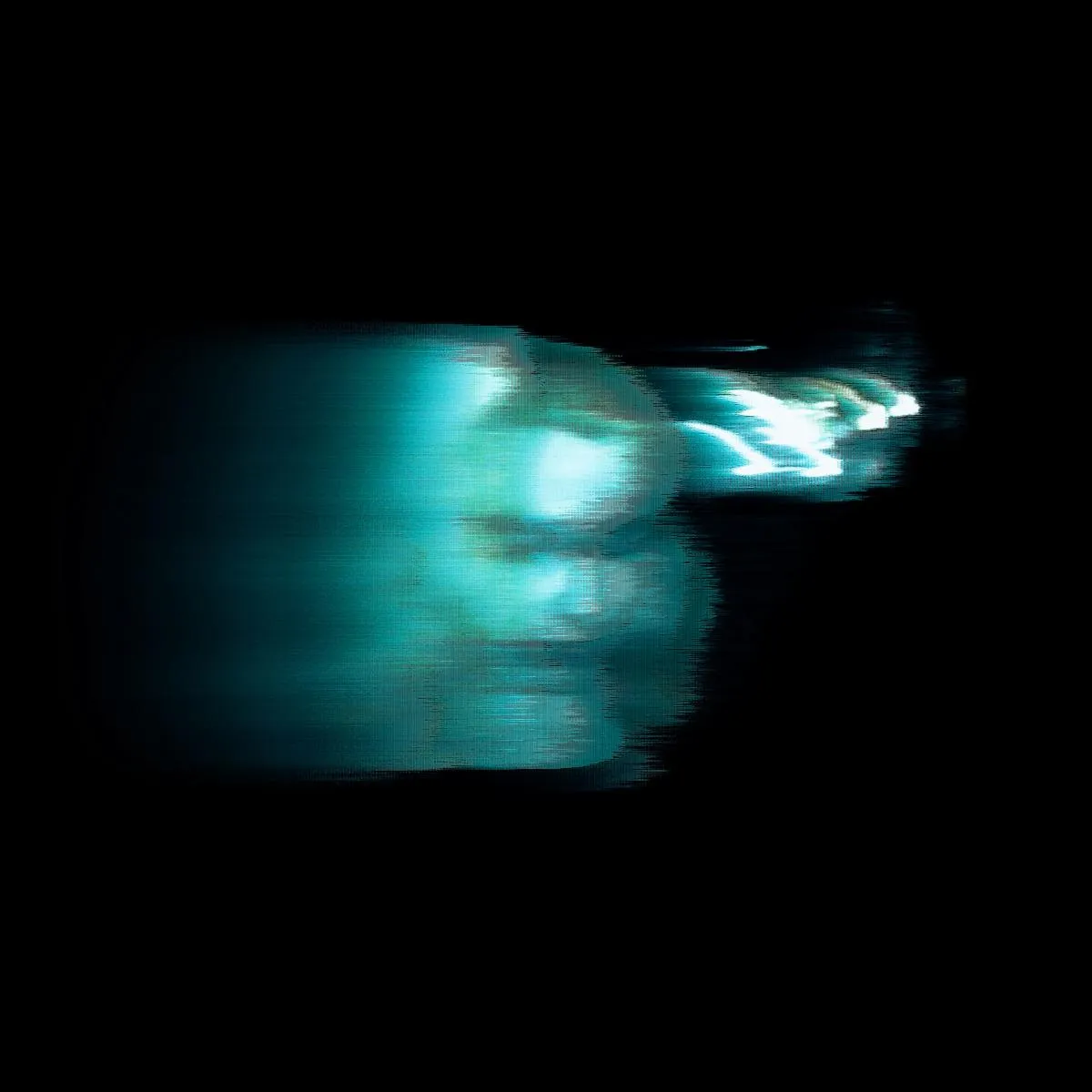
If there exists any way to listen to “The Outside” without breaking into tears, I have yet to find it. The four-minute opening track to Lost Weekend, the eagerly awaited follow-up to Phoebe Bridgers’ 2020 masterwork Punisher, begins with a death gag delivered through a vocoder before her true whispery cadences surface. With her voice shrouded in mechanical distortion, she recounts her father being borne away in a coffin, and then herself being carried off in a throng. The music darts between a chilly, solitary void and a delicate, hypnotic piano as she slides in and out of dissociation. Punisher brimmed with moments of crushing weight, but none hit with quite the same brutal force as this.
Punisher, issued when she was 25, propelled the now-31-year-old Los Angeles singer-songwriter from narrow indie acclaim into broader recognition. Its timely focus on isolation and sorrow amid a global pandemic certainly aided its success, and the lush, hushed sound offered a satisfying backdrop for her musings, which were meticulously shaped to strike a precarious balance between heartbreak and whimsy—a knack many artists have since tried and failed to imitate. Her habit of seizing on quips in the darkness is often used as ammunition by critics, yet the first line of “The Outside” reveals her dedication to humor: “Crying in a suit and tie/ But you should see the other guy.” It isn’t laughter—it’s a gut punch that deepens as she continues in the graphic, intricate portrait of the funeral, “One more time for old time’s sake/ I’ll watch him get carried away.”
Lead single “Lost Boys,” Lost Weekend’s sole pre-release track, suggested an album akin to Punisher: a collection of sharp, emotional vignettes, contained within acoustic terrains embellished with synths that simulate the sensation of being underwater. Yet Lost Weekend operates on another plane. Wrestling with the death of her father and the blossoming of her romance with Bo Burnham, the songs are speckled with electronic elements that feel like an unexpected yet entirely logical leap. More than that, there’s an incline toward bluegrass Americana textures that she touched briefly on the Punisher fairytale “Graceland Too.” This time, pedal steel, mandolin, and banjo bloom alongside her reflections. A funeral organ transmutes some songs into dirges—a stark contrast to the tracks that erupt with folksy, celebratory energy. The remarkable title track, for instance, hums with a church organ while discarding traditional song structures. Bridgers opts for a single verse, an amalgam of memories and stream-of-consciousness that yields to a burst of electronic chaos, punctuated by breaths, buzzing, and viola.
Even the album’s spare, acoustic moments bear little resemblance to its predecessor; Bridgers uses her voice with greater care and exploratory risk, sinking into unexpectedly low octaves on “Kill Me” and crying out as if gasping for air on “As Above.” There are too many collaborators involved for the record to feel like a Punisher redux: Jack Antonoff, Alex G, Cameron Winter (under a pseudonym), Christian Lee Hutson, Maya Hawke, Julien Baker, Lucy Dacus, to name a few. Some even more surprising contributions come from metal figures like Jesu and Godflesh’s Justin Broadrick. The tracks are rich with instrumentation; even the synths are deployed in a way that emits off-kilter blips contrasted with the Punisher universe.
The explosive clamour on “Bobby,” a love song in the literal sense, nearly attains the volume of the deafening finale of Punisher’s “I Know The End”; it feels as if she’s shouting her affection from the rooftops. The song’s muse, Bo Burnham, provides vocals himself, along with many of their friends, because a proper celebration needs them. Some have grumbled about the number of people who worked on Lost Weekend, as if too many collaborators might dilute Bridgers’ creative vision. Yet given the loneliness conveyed on Punisher, you can’t help but feel glad for Bridgers to be surrounded by friends and to be making the music she loves with them—especially when the result is so rewarding.
“The Governor’s Waltz” is the closest track to Punisher there is, but more critically it feels like Bridgers’ most faithful Elliott Smith imitation to date. Christian Lee Hutson handles the acoustic guitar with a hypnotic strum reminiscent of Smith’s emblematic “Angeles” from Either/Or. Bridgers’ voice is wispy as cigarette smoke as she recalls parties and offers razor‑sharp one‑liners like, “You deserved better, you wanted me.” The most Smith‑ian element, though, lies in the simmering diss tucked in at the end, aimed at her (former) friend Gracie Abrams, who is now dating Bridgers’ ex, Paul Mescal. Yet even that line lands as self-critique more than anything.
The second half of Lost Weekend unfolds like a collage, peppered with interludes, instrumental passages (“Lost Parade”), and brisk, vivid vignettes (“Panorama,” “Other Plans”). “Never Going Back!” arrives as a quick, sea-shanty‑flavored number that includes a voicemail from her father. The finale, “Lost Weekend (Reprise),” is brief as well, just over two minutes. Bridgers has a gift for constructing expansive atmospheres to navigate for around four minutes, but this shorter mode is equally gripping; there’s a ghostliness to its transience, how she sets a scene with a few words and then exits, fading into the ether and leaving you wondering what happened next.
The only option in the face of death or love or anything is to press forward. Lost Weekend confidently drifts away from the comfortable, luminous world of Punisher, while still nodding to it with melodies and lyrics that wink at it. Lost Weekend refuses to conform to linear time; its bluegrass sensibility nostalgically summons the spirit of distant eras, while the electronic elements emit a futuristic glow. Death and love don’t follow rules, and neither does Lost Weekend.
Lost Weekend is out now on Dead Oceans.