During the closing years of the 2000s, the track “Young Folks” felt almost like enchantment in the air. Its signature whistle would drift along a city block, as if summoning a flurry of microbreweries and Whole Foods to sprout nearby. When someone jammed it on a burned CD in a battered Discman, the device might as well morph into an iPod Nano, the kind of upgrade you’d swear was scripted by Alex Patsavas. And when the song floated into a room full of real young people, their outfits shifted toward Urban Outfitters fare, and their conversations turned to which offbeat show to marathon on DVD.
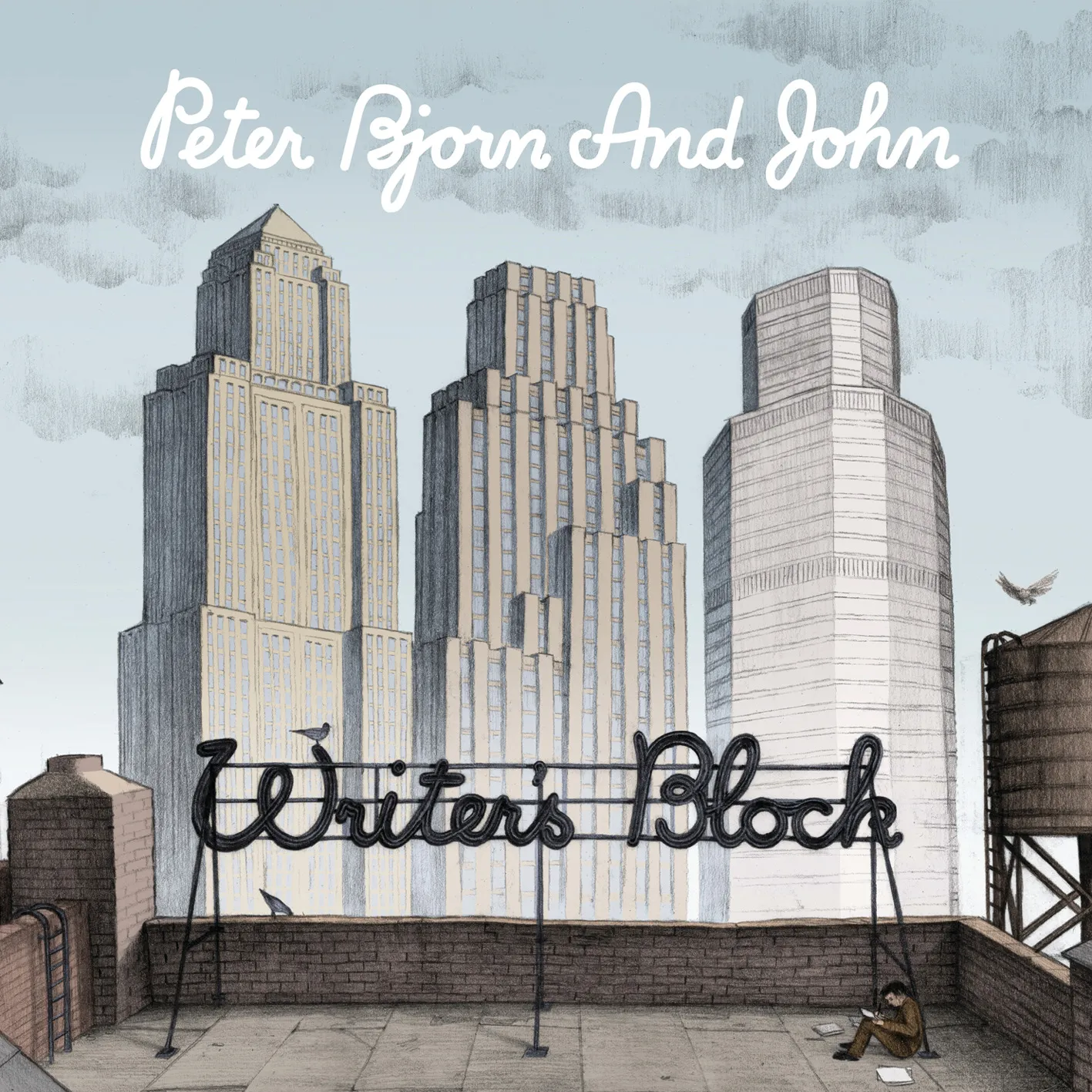
Here’s the darker read, the cultural baggage I can’t shake despite my affection for the music: Writer’s Block, the album Peter Bjorn And John released two decades ago, arguably marks a tipping point in the gentrification that swept indie rock and its accompanying culture in the early 21st century. Speaking as someone who’s written about how indie went pop, revisiting the Swedish band’s breakout LP makes it hard not to see it as a bridge between scrappy, DIY blogger tunes (think Jens Lekman, given the Swedish connection) and the pristine lifestyle soundtrack of the future (think Foster The People). A lot of these songs ended up as commercial fodder, licensed by music supervisors and ad executives who heard the band’s approachable chic and heard the telltale “ch-ching.”
And here is the positive spin—the takeaway that, for me, defeats any lingering doom: I treasure Writer’s Block without hesitation. I adore “Young Folks,” to be sure, but Writer’s Block is far more than a single track. It ranks among the finest indie rock records of the 2000s, a comprehensive triumph of songcraft from start to finish. A decade after its birthday, when the album reached its tenth anniversary, I fixated on PB&J’s hallmark tune, one of the era’s defining indie anthems, assuming readers would recall that tune more vividly than the album as a whole. Now I feel compelled to cast a wider net and applaud the entire tracklist, lest history forget how decisively it bangs as a whole.
Guitarist Peter Morén and bassist/keyboardist Björn Yttling began making music together as teenagers in the Swedish town of Västerås. By 1999 they had relocated to Stockholm and joined forces with percussionist John Eriksson, adopting the practical name Peter Bjorn And John. Their first two records, the 2002 self-titled debut and 2004’s Falling Out, were stylish, energetic pop-rock with a nod to the ’60s—nothing flashy, but enough to place them among a scene with like-minded Swedes such as the Concretes and the Shout Out Louds, both of whom would contribute to the “Young Folks” phenomenon (a duet partner and a music video director, respectively). Nothing about those early PBJ releases suggested they were on the verge of crafting a brilliant, universally beloved collection of songs, yet that’s precisely what happened next.
Writer’s Block would be an knowingly ironic title for an album in which the floodgates opened and the band’s greatest tracks poured forth, yet the name is said to reference Hornstull, a Stockholm neighborhood teeming with creatives, where the record was made in Yttling’s studio. There, they sharpened their abilities as writers, producers, and arrangers. It’s possible to hum along to every cut, but the album shines for reasons that go far beyond pairing the right vocal melody with the right chord progressions. Here, every instrument operates as a hook, with Eriksson’s relentless drum patterns standing out in particular. Each guitar chord and riff is a little focal point, yet none of them overwhelm the unified whole.
They aimed high on this release, and they pulled it off by paying attention to the tiny details. A notch above their previous work, these guys conjured a thick emotional haze on “Roll The Credits” and rendered “Amsterdam” with a quaint, eccentric charm. They weighed down the listener with the gravity of years on “Objects Of My Affection” and pared it back on the lovestruck “Paris 2004.” They braided wordless “sh-sh-sh” phonemes into something resembling jungle breaks on “The Chills,” then shifted to near-silence as if Morén had just witnessed the person he loves bathed in celestial light. They layered texture in and out of “Up Against The Wall,” a finely tuned engine of feeling and momentum, then piled it all back on until the listener spirals into a state of euphoria.
Over and over, PBJ made bold musical decisions here. Sometimes, as on “Young Folks,” “Amsterdam,” and “Let’s Call It Off,” those choices helped seed the twee-but-polished zeitgeist that was about to render swathes of pop culture endearing in an earnest, nerdy way. Those tracks are meticulously crafted, and you can understand why they resonated globally, even catching the ear of rap trendsetters like Kanye West and Drake. Yet, for me, the strongest moments aren’t the breezy anthems; they’re the emotionally charged ones. Writer’s Block traverses heartbreak, swoony romance, melancholy, and unbridled joy. With sincere, specific lyrics and Morén’s youthful tenor coloring, these songs feel like real life staged on a grand, cinematic scale—a feat most pop songwriters only dream of achieving.
I wore Writer’s Block out during its peak. Its ascent coincided with my early months at a weekly newspaper, a job I landed straight out of college by luck and effort, and it became the soundtrack for countless drives around Columbus. The paper’s 2006–07 archives aren’t online anymore, but I’m sure I filled those pages with effusive praise for PB&J. If this album marked a decisive turning point for indie rock, it also framed my own transition into adulthood. Returning to it now, I worried it might feel diminished, quaint, or fragile. After spending a week immersed in PB&J’s opus all over again, I’m more convinced than ever that it’s a stone-cold classic.
Still, if Young Folks were the only lasting artifact of this record, PBJ could still hold their heads high. Yttling’s whistling hook, Eriksson’s brisk percussion, the playful dialogue between Morén and Victoria Bergsman, and yes, those bongos — all of it came together as if by enchantment. Much of that enchantment still resonates today, not merely as a marketable whimsicality, but as something deeper and enduring.