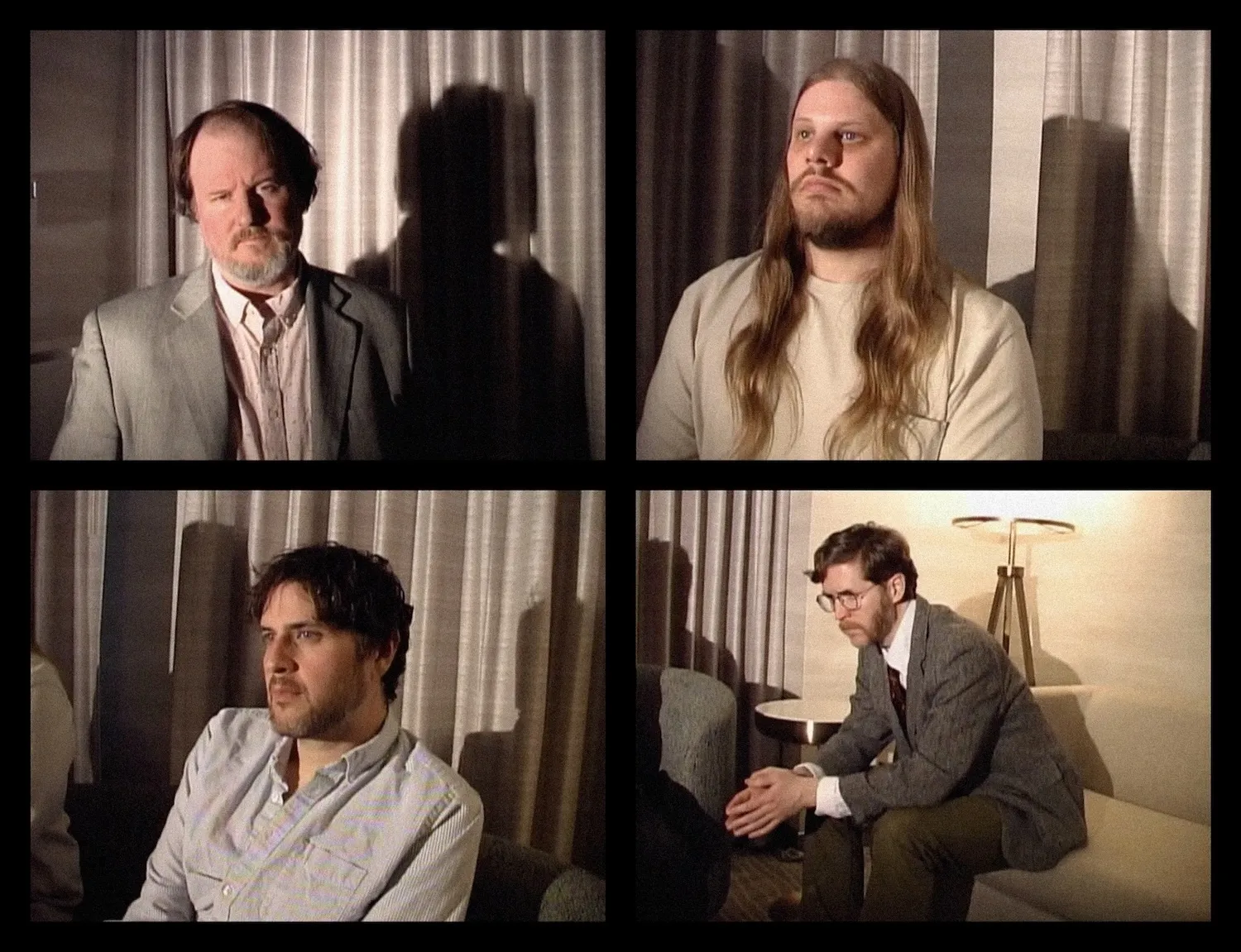
In a mere few weeks, Detroit’s own Protomartyr—long associated with the city’s post-punk lineage—will unveil Hotel Usona, the forthcoming album laid down with Dave Fridmann, a producer whose résumé holds a storied collection of classics. After sharing the opening cut “Sounds We Cannot Hear,” the band now reveal a second track, “Feed The Sewer,” a ferociously crooked skronk-rock outburst that feels both crushing and liberating in equal measure.
Is the phrase “feed the sewer” a crude nod to defecation? Not in the literal sense here. Rather, the track’s heaving, throaty pulse dwells on the creeping forces of enshittification intruding upon everyday life. Here’s how frontman Joe Casey frames the idea:
The title originates from a line of dialogue in a Peter Greenaway film. The song contends that artificial intelligence resists humanity. It argues that people are often ready to wreck the world in the name of convenience. The lyrics blend political anxieties, personal grievances, literary allusions, and toilet-humor jokes. Musically, it’s brutal—loud enough to feel like a data center.
Actor Nate Varrone, whose credits include Maddie’s Secret and a moment on The Bear, starred in the “Sounds We Cannot Hear” video, and he returns for the surreal clip for “Feed The Sewer.” This time, director Andrew Theodore Balasia frames Varrone as he spends $50 to observe security-camera footage inside a motel where a host of uncanny occurrences unfold. Balasia explains:
Loneliness in the age of surveillance is the thread we explored for this project. The motel becomes a microcosm of data collection, with each room serving as a profile — each guest willingly paying to inhabit a space that is being observed by strangers. The ordinariness of what’s being watched grows unsettling, stripping away spectacle until all that remains is a dull, persistent longing to connect with anything.
Watch it below.
Hotel Usona is scheduled for release on 9/25 via Domino.