Taylor Swift says she loves the way fans sift through her lyrics to uncover deeper layers of meaning.
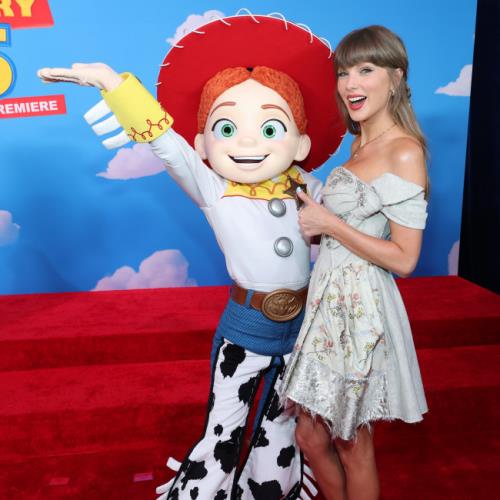
Earlier this year she leaned into her country roots to compose I Knew It, I Knew You for Toy Story 5, noting that several phrases invite multiple interpretations because she aimed to capture the film’s essence within the track.
During a chat on American Country Countdown, she explained that she loves when listeners really dive into the song’s words, pointing out that multiple lines carry dual meanings.
“There’s only so much time in a song to convey and surmise and sum up this entire film [Toy Story 5] that people just watched. Sometimes you’ll try to have a double meaning in a line.”
To illustrate, she highlighted lines such as “I knew you through the daze of the blades of the grass in summer/ Parachutes for the free fall of being younger.”
She went on to clarify: “The word daze is spelled ‘d-a-z-e’ in the lyrics, but you could also, if you wanted to, think of it as days, ‘d-a-y-s,’ you could perceive it as that. I thought of it as like a childhood daze of you look back and you see this sort of blurry, beautiful memory that’s kind of blurry at the edges.”
“Blades of the grass in summer” evokes childhood summers spent imagining and playing, while also hinting that they’re toys that can only reach up to the height of the grass.
“’Parachutes for the free fall of being younger’: There’s the actual parachute army toys in Toy Story, as well as symbolically, somebody who helps you grow up, helps your landings be softer.”
The 36-year-old singer is “very proud” of the attention to detail she brings to her songwriting but stressed there’s always a reason for her expansiveness.
She remarked: “It’s, kind of, been brought to my attention – and I agree with this – that I love to use detail in my lyricism.”
“That’s true [and] I’m very proud of that, but I also think one thing I always make sure to check myself on is, ‘Does this detail signify something that informs the story or does it tell the narrator the mindset is in or what place they’re in?’
“Detail just for the sake of saying descriptive words is not really my thing. I love detail if it informs the actual human emotion that we’re singing about.”
Elsewhere in the interview, Swift shared one of the biggest lessons she’s learned about crafting songs over the years: mood matters.
She said: “Your energy and attitude that you bring into the room affects absolutely everything about the day.”
“So, really trying to be accountable to knowing that enthusiasm for the actual craft … can make or break the session. Like, if you come in and act like you don’t want to be there, everyone else is going to pick up on that. It doesn’t matter if you’re an artist, writer or engineer; everyone’s gonna pick up on you not wanting to be there.”
“These are very intuitive people who want to make art, [so] it could make it so no one can make anything that day if you’re acting like [you’re] dragged in there.”