Peter Gabriel is steadily unveiling tracks from his forthcoming album oi, introducing a new single on every full moon. The previous release, “Looking For The Happy,” he described as a meditation on gratitude and a pledge to complain a little less. The latest entry, “Face The Wall,” directs the spotlight toward mortality, as he puts it, “looking death in the face.”
“After last month, when we were pursuing ‘the happy,’ we can follow that thread straight into Face The Wall, a piece that confronts death head-on. It’s a surprisingly cheerful subject,” he remarks in a statement, and continues:
The lyric touches on aging, illness, and facing death—an experience we often shy away from. I’ve said this before, but cultures that treat death as a normal part of life seem more at ease with it and live more fully. That was the starting point.
Music serves as a cathartic process for many of us, and when I sing the closing line, “I see you coming through,” it becomes a moment of release. I believe that line is significant; as the song unfolds, conditions grow harsher and more intense, yet it hints at a reason for hope.
You never quite know in the studio whether a song will become a vehicle to carry listeners, or not. I’m confident this one will speak to some people.
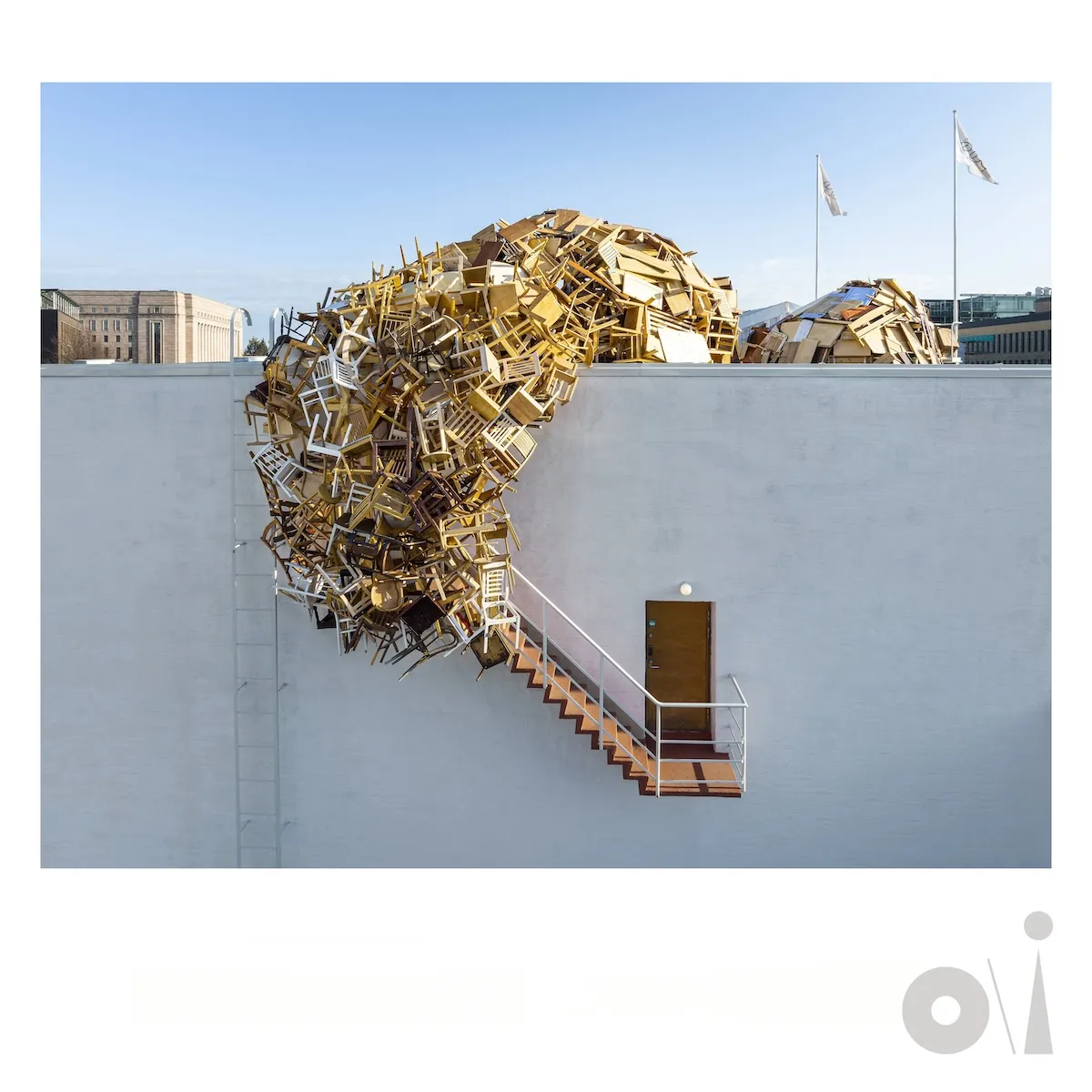
The cover art is titled “The Nest. Amos Rex” by Tadashi Kawamata and photographed by Mika Huisman. Here’s how Gabriel describes it:
When I first encountered The Nest at Amos Rex, I immediately fell in love with it. To me, the wall looms large, solid and unyielding—a bit like death. These chaotic human chairs topple the wall, spilling over its edge. It’s funny, yet it’s also hopeful and defies unbelievable odds.
I hadn’t known Tadashi Kawamata’s work before seeing this image, but it ignited something in me. I felt it was a perfect fit for this song and it sent me exploring much of his other work.
I think I’m drawn to things that push against the rules or do things in an unconventional manner. We’re used to art being displayed in museums or on walls, whereas this piece tumbles beyond those boundaries. That feels more interesting, adventurous, and unlikely as a context. Kawamata incorporated elements—especially the chairs—from local reclamation sites, so, in a sense, they belong to that community and neighborhood, namely the Lasipalatsi area in the heart of Helsinki. The site-specific nature of the work is something he clearly enjoys playing with.
An artist to explore for those of you who love this image as much as I do.
Hear “Face The Wall” below.