
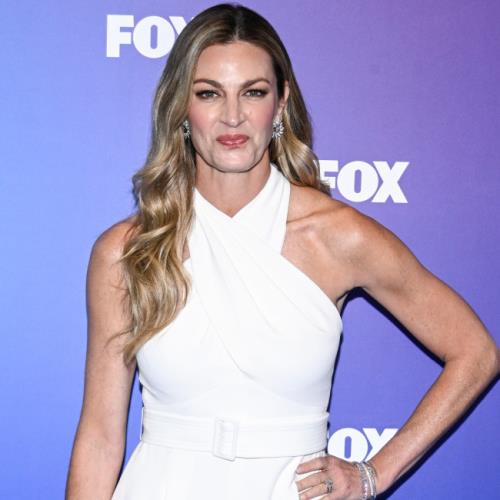
Erin Andrews and Charissa Thompson found themselves unable to take part in Taylor Swift’s Patient Zero video, even though they had been invited and their partners joined the project.
Sportscaster Erin, aged 48, and Charissa, 44, were thrilled when the pop icon personally reached out and invited their entire circle of friends to participate in the remarkable clip, which features Dakota Johnson and Colin Farrell and was filmed in March.
While Erin’s husband Jarret Stoll, 44, and Charissa’s partner Steve Cundari appear in the footage, the two women could not join in. Erin was occupied with hosting a major event in Washington, D.C. with a high-profile guest list on the same day as the shoot, and Charissa had just undergone a CO2 laser treatment two days prior.
In the latest episode of their podcast, Erin recalled that she would never have cancelled, but she called her manager and agent to explore every possible workaround, asking if there might be a way to shuttle her back and forth—perhaps with a private jet—since Taylor Swift had extended the invitation and she wanted to be a part of it.
They even explored flight options, considering a private plane, with Erin insisting she would cover the costs herself.
Nevertheless, she chose to do what felt right and attend the Washington, D.C. event to avoid any negative consequences or “karma.”
Erin later revealed that she endured what she described as the most violent food poisoning she had ever experienced during her trip to the U.S. capital. She and Charissa found themselves commiserating, texting about how their boyfriends and husbands were able to participate in the project.
“Of course we’re happy for them, but it’s not how we’d hoped this would unfold,” she noted with a touch of frustration.
Meanwhile, Charissa could not appear in the Patient Zero video because she was dealing with the aftermath of her CO2 laser treatment.
She explained that there was no way to apply makeup and still look presentable—the swelling and scabbing made it impossible to participate.
Charissa added that anyone would be disappointed not to be in the video, and that her vanity—she’s trying to stay youthful for television—had complicating factors this time around.
Although she couldn’t be on camera, Charissa went to the shoot to offer support. She explained that the next best thing for her was to observe the proceedings and see how this formidable woman ran the production with authority.
“The most extraordinary outcome would have been taking part, but the second-best experience was simply being there, watching her steer the shoot with grace, kindness, and professionalism—an instructional masterclass on how to manage such a project.”
Charissa concluded that she left the experience with an even greater respect for her peer than she already had as a seasoned professional in an industry she doesn’t claim to fully understand.