You can’t simply decide that you’re going to craft a timeless record. If it were that straightforward, everyone would be doing it. We’d sift through heaps of enduring albums every week. An artist can’t simply determine that their new record is destined to become a classic. Yet one move they can make is to try. They can lay everything on the table, pushing their boldest notions with every tool at their disposal. That tactic is a gamble. It rarely pays off, and when it fails, the artist can come off as pompous. The circumstances have to line up just right. The artist needs to be in the proper mental and temporal frame to create something that resonates and lasts. In 2006, My Chemical Romance had both the chance and the drive. They chased it, and they pulled it off. They triumphed.
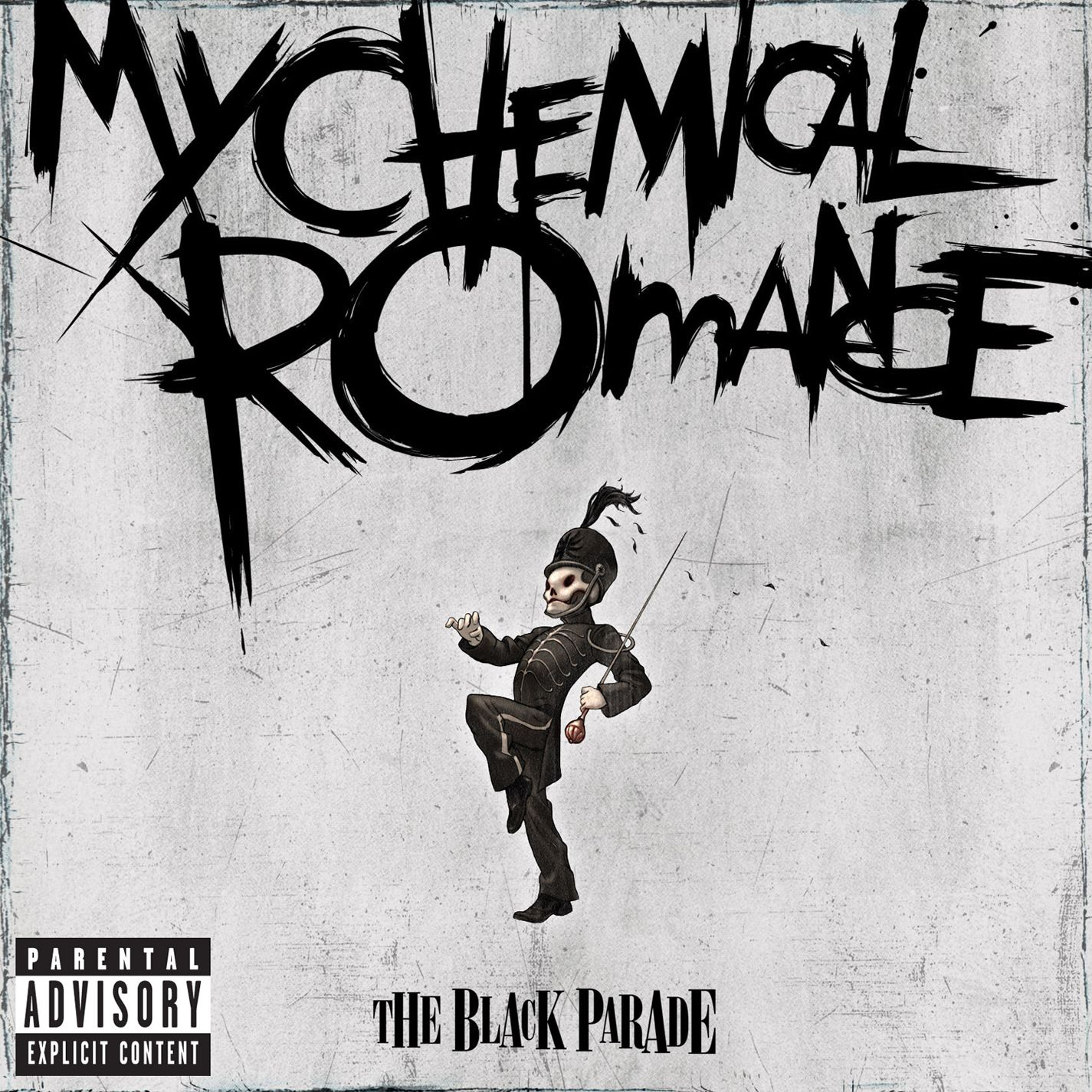
I didn’t initially believe that My Chemical Romance’s third and strongest album would become a classic when it first appeared. I pushed back. The Black Parade, which turns twenty this Saturday, arrived with a torrent of advance hype. There would be strings on this record. Horns. Choirs. Liza Minnelli. Visual motifs. A sweeping, deliberately grand overarching narrative. The band even devised entire new personae for themselves. They wore coordinated costumes and added theatrical props to their live performances. On tour, every night they played the whole album straight through before returning to their old hits. During the pre-release press cycle, Gerard Way even shaved his hair and bleached it to embody the cancer-patient alter ego he’d imagined for the record. (He was really echoing earlier generations of rockers reinventing their image for new albums. To the best of my knowledge, chemotherapy doesn’t shrink your hair or turn it blond.)
I was wrong about The Black Parade, and in the wake of the album’s anniversary, I’ve found myself wondering why. When The Black Parade dropped, I’d just turned 27, which meant I was roughly the same age as the band members themselves, not their fans. Their fans were about ten years younger than us. They were products of the mid-2000s MySpace emo boom, an easily dismissed scene if you were a snarky aspiring rock critic back then. Twenty years on, it’s clear that the MySpace emo moment marked the last time guitar-driven rock managed to commandeer broad cultural sway among young people. We’ve had occasional hints of rock making a comeback since, but nothing on the scale of what MCR and their peers achieved then. I enjoyed following it at the time, but I should have paid closer attention. This was a historical moment. We don’t get many of those.
My Chemical Romance emerged during the earliest churn of the emo boom, and they were by far the most theatrical band of that scene, at least until genuinely theater-obsessed acts like Panic! At The Disco came along. The “Helena” video, with its smudged makeup and Broadway-esque choreography, seemed absurdly silly, at least compared with the rap and indie-rock I loved at the time. When I flipped over to Fuse and saw the girl springing from the coffin to dance, I laughed out loud. I let those theatrical trappings distract me from an all-time rock chorus. That was my fault. Those frills drew countless kids to MCR, and the killer choruses kept them around. Or maybe it was the other way around.
In any case, My Chemical Romance’s 2004 major-label debut Three Cheers For Sweet Revenge went platinum, and then sold another two million copies in the ensuing years. Its success thrust MCR into the same conversations as the other Warped Tour acts who exploded with teenagers in that Web 2.0 era: Fall Out Boy, Taking Back Sunday, Hawthorne Heights, Thrice, the Starting Line, Brand New. My Chemical Romance couldn’t wait to escape those conversations.
The band came up from the New Jersey basement-emo circuit, and Thursday’s Geoff Rickly, a rising star in that sudden emo explosion, produced their 2002 debut I Brought You My Bullets, You Brought Me Your Love. If that record had appeared a few months earlier, I might’ve seen MCR at one of the Syracuse hardcore matinees where I used to see Thursday. But My Chemical Romance didn’t want to translate the mutually supportive catharsis of those basement shows to the masses, the way Thursday did. They also didn’t want to morph it into glossy pop, like Fall Out Boy. They aimed to craft a horn-blasting, epic-scale classic-rock record of monumentality.
When Gerard and Mikey Way were kids, their father took them to the city to see the Smashing Pumpkins play Madison Square Garden during the Mellon Collie tour. When the brothers saw that, they decided that that’s what they wanted to imitate. The Pumpkins’ appetite for grandeur set them apart in the grunge era, and My Chemical Romance had a similar relationship to the emo spaces that spawned them. They operated within the broader Warped Tour ecosystem, but they didn’t see themselves that way. In Chris Payne’s readable emo oral history Where Are Your Boys Tonight?, Mikey Way says, “We wanted to be a rock band. At the time we were at odds with the term ‘emo,’ and we did everything we could, kicking and screaming, to escape from it. Even if it meant risking everything.”
When they made The Black Parade, My Chemical Romance risked everything. They entered the process with the explicit aim of building a sweeping and ambitious concept album. The record’s working title was The Rise And Fall Of My Chemical Romance, but they wisely deemed that idea too cute. Before any music was written, Gerard Way came up with the Black Parade title, plus the mythology, the arc, and the aesthetic. Mikey says that Gerard “had costumes and characters ready to go, drawn in his notebook.” Perhaps Green Day’s similarly grandiose, genre-defying 2004 album American Idiot served as a precedent as well. MCR toured with Green Day in 2005, and they enlisted that band’s top collaborator, Rob Cavallo, as their Black Parade co-producer. When they began crafting videos for the album, MCR brought in Smells Like Teen Spirit director Samuel Bayer. Their selection of collaborators intentionally aligned them with the previous decade’s alt-rock titans, not with their jelly-bracelet peers.
MCR and Cavallo decamped to LA’s famously spooky Paramour Mansion to record The Black Parade before they’d written much of anything, and the sessions were a struggle. Mikey Way, in particular, battled a paralyzing fear of ghosts, and the place is whispered to be haunted. He developed night terrors so severe that he had to take a break for his mental health from the band. A newly sober Gerard threw himself into the writing, devising a complex storyline about a dying man trying to reconcile his regrets, flaws, and broken connections on the way out. Showbiz legend Liza Minnelli recorded a vocal cameo, likely more for symbolic presence than for real vocal texture, though she did perform the brief part with gusto. Minnelli hadn’t met the band before, but she was happy to participate, and she did her work for free.
When the meticulous production process finally wrapped, Rob Cavallo celebrated by hiring a private jet for the band to fly to Las Vegas, where they stayed in the Real World suite at the MGM Grand. That’s not emo behavior, or at least it hadn’t been emo behavior until emo became a big business. It’s arena-rock behavior. The truly remarkable thing about The Black Parade is that My Chemical Romance weren’t merely dressing up in arena-rock drag. It’s a legitimately stirring, over-the-top opus, far closer to Queen or Bowie or Guns N’ Roses than to the Promise Ring or Sunny Day Real Estate. MCR kept the feverish energy of their earlier records and translated it into something truly absurd and majestic. It’s inspiring that they tried, and even more inspiring that they pulled it off.
The Black Parade has the compelling rock-star mix of sincerity and irony, one of those classic situations where you can’t tell where one ends and the other begins. When they shred a blazing, soaring guitar solo, are they quoting the classic-rock playbook or doing it for real? When Gerard Way delivers a cheeky, sardonic preen-snarl on songs about love and death, is he stepping back from his own words, or does that just come naturally to him? Does it really matter? When I hear the tidal swells of melody on “I Don’t Love You” today, I stop worrying about whether it’s the obligatory power-ballad moment, and I simply feel the power. This era has given us surprisingly few over-the-top power ballads on the level of “I Don’t Love You.” In the rare case where a band has both the clout and the drive to commit the resources to crafting a song of that magnitude, listeners should stop fretting about intent.
I couldn’t stop fretting about intent, context, and whatever notions of cool I held in 2006. I wasn’t prepared to take The Black Parade seriously when it arrived, and I had to tell myself, “Damn, that’s pretty good” only after I finally heard it. But I didn’t instantly convert. A few months after the record’s release, I gathered some critic friends and we drove out to Long Island to see My Chemical Romance headline Nassau Coliseum, the cavernous arena that wasn’t as close to New York City as I’d assumed. The venue wasn’t packed, but the crowd that did show up was all-in. Thousands of teenagers wore skeleton-hand gloves, and there was so much Nightmare Before Christmas merch on display that you’d think Jack Skellington was the emo frontman — which, come to think of it, perhaps he was. The kids of Long Island showed up for a Hot Topic rock opera, and MCR delivered.
When I reflect on that MCR show, it feels almost unreal — the Tim Burton–style set, the matching costumes, the opening bit where stagehands wheeled Gerard Way out on a gurney. But when I revisit my actual notes from the moment, I can see my own resistance at work, even though the review was mostly positive: “My Chemical Romance isn’t an arena band, at least not yet; they’re still an emo band playing an arena, pulling out every trick they know to convince us they know what they’re doing… I can’t escape the nagging feeling that MCR’s reach slightly exceeds their abilities.” Whether time has erased the awkwardness from my memory or I simply wanted to hold back my enthusiasm for a band I still regarded as kids’ stuff on some level, I don’t know.
There is some awkwardness to The Black Parade. The oompah-tinged moments in “Mama” still grate two decades on, and I can hear Way occasionally reaching for majesty a touch too stridently. Maybe the concept itself was a crutch. Then and now, my favorite track on the record is the one that exists entirely outside the overarching narrative. “Teenagers” is a sharp, turbo-glam punch of a song, a snappy anthem with nothing to do with life and death. It’s simply a half-joking Gerard Way blasting that teenagers frighten the living daylights out of him, over some of the heaviest riffs of 2006. That night on Long Island, the teens devoured it. If I have one real gripe about The Black Parade, it’s that it could use more songs in the vein of “Teenagers.”
Way said he wrote “Teenagers” after finding himself on a New York subway car crowded with teenagers and realizing they truly unsettled him. It got him thinking about his own not-too-distant teenage days and the adults who treated him as less than human. It took forever to get back to Brooklyn that night, and I clearly remember all the teens who rode the train with me. They didn’t scare me; I felt oddly protective of them. I rode two or three lines to reach my neighborhood, and the crowd thinned, but I could still spot those who had been at the show. By the time I reached my block, it was just me and a handful of Black and Latina girls in their skeleton-hand gloves. These kids challenged the suburban-mall-rebel stereotype I had for MCR fans, and perhaps I should have pondered a little longer what their presence signified before writing that MCR weren’t really an arena band.
But then, The Black Parade didn’t necessarily feel like a landmark cultural moment when it first appeared, at least to someone who was already perceptibly jaded. The album was a hit, certainly. In its first week it sold more than 200,000 copies and debuted at #2 on the album chart, behind the Hannah Montana soundtrack. (I wonder how many kids bought both records that week.) “Welcome To The Black Parade” became the band’s first and only top-10 hit on the Hot 100. The Black Parade eventually went quadruple platinum, which means it outsold Three Cheers For Sweet Revenge, but not by a wide margin. The record earned broadly favorable reviews, and a handful of critics championed it, but it didn’t crack the year-end top 40 on the Pazz & Jop poll.
From the outset, though, MCR’s peers knew they’d been leapfrogged. In Where Are Your Boys Tonight?, there’s a memorable moment when Taking Back Sunday’s Fred Mascherino recalls the moment MCR played The Black Parade for their Long Island peers: “Louder Now came out, and we thought, ‘Oh man, we crushed this. No one can touch ‘Makedamnsure’ or ‘My Blue Heaven!’’ And then they played us Black Parade, and it’s just like… motherfucker.” Some of the press recognized The Black Parade as a cultural event — the Daily Mail’s alarmist piece about an emo cult — a dumb thing to publish, but it’s also a sign of real cultural impact.
All these years later, it’s clearer than ever that The Black Parade is My Chemical Romance’s masterpiece and the definitive opus to emerge from emo’s arena moment. (Sorry, but MCR are forever tied to that era, whether they intended it or not.) The band only had one more album in them, 2010’s Danger Days: The True Lives Of The Fabulous Killjoys, before they called it quits. Now, they’re back together, and they again perform The Black Parade in full each night on tour. They’re still not an arena band, though. They’ve leapfrogged that rung. They’re a stadium band now. If anyone deserves that stadium status, it’s them. When you set out to make a classic album and you actually pull it off, stadiums are precisely where you belong.