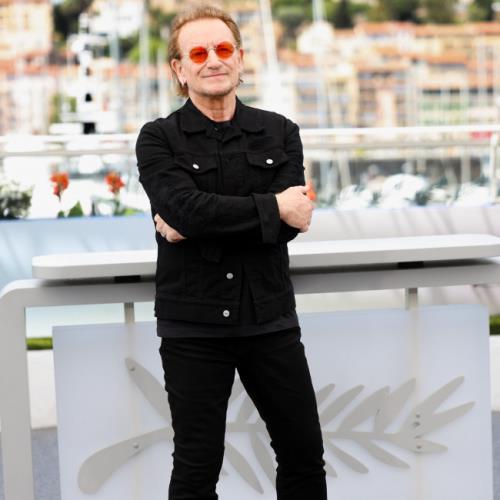
In a conversation with The New York Times, Bono admitted bluntly: “I went too far on that one.” He also noted that their former manager, Paul McGuinness, held a view that aligned closely with what Tim Cook, the late Apple founder’s successor, had reportedly said about the stunt. Bono recounted McGuinness’s reaction as echoing Cook’s sentiment when the idea was pitched: “You spent your whole life getting people to pay for music. Why would you want to give something away for free?”
Despite the misstep, Bono suggested the move was part of a broader experiment. He described the approach as exploratory rather than a finalized strategy, explaining that the band wanted to test whether Apple or another company might finance the music and handle its distribution. He also acknowledged the broader challenge facing the music industry, noting how little compensation many musicians receive and how frightening that reality is, while attributing the initiative’s fallout largely to his own decision.
The Edge, the band’s bassist, defended the philosophy behind the risk-taking, emphasizing the necessity of pushing boundaries. “We have to. So you fail, you fall on your face at times. That’s part of the gig,” he stated.
In 2015, producer Flood was asked whether the stunt had been a miscalculation, but he perceived a constructive outcome. He told Gigwise that it sparked a public examination of how music is valued in society today, a question that still lacks a definitive answer. Flood added that the move prompted inquiries into listeners’ preferences and, perhaps more provocatively, whether people are entitled to choice or if that very freedom is being eroded.
Bono has likened the whole episode to delivering an unwanted bottle of milk to households around the world. In a 2022 interview with The Guardian, he reflected on the potential worst-case scenario, comparing it to junk mail—like dropping a bottle of milk on every doorstep in a neighborhood. Yet the reality, he confessed, proved more complicated: it wasn’t merely placed on doorsteps but ended up in virtually every fridge in town. He went on to acknowledge that, in some instances, the milk ended up on the good people’s cornflakes, while others might prefer to pour their own milk, and some individuals simply cannot digest dairy.