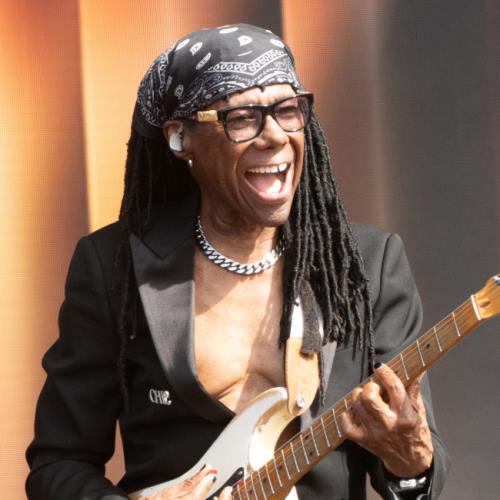
Nile Rodgers has defended his decision to employ artificial intelligence in producing the music video for his fresh take on The Christmas Song.
The Chic icon stirred debate among fans after revealing that the project would incorporate AI-generated footage.
In an Instagram post, he described being “hard at work on a remarkable art project that’s next level. This marks the beginning of the process. The AI capture was extremely thorough and I’m thrilled about the final piece.”
He added that seeing the Eagles perform at The Sphere in Las Vegas gave him visions of stories set in breathtaking settings with music and atmosphere. “The future is now,” he said, implying a forward-looking approach.
One follower replied: “There’s a better way to safeguard your legacy.”
Rodgers replied: “Wait until you see it before judging. You’re picturing the worst instead of the best.” Yet the critic countered: “I don’t have to guess, my friend—look at what AI has done to art in general, not to mention music. Promoting it so aggressively isn’t the right path.”
Despite the mounting backlash as he promoted the project, the musician stood firm, arguing that AI is simply a tool and that the team had still “painstakingly created every second you’ll see on the screen.”
He wrote: “We created everything—from mood boards to storyboards—and approached it the way we would a film. The AI followed our directions, and every second on screen was crafted by hand… If this were a traditional film, it would have cost roughly $100,000.”
Nile told another user that it was “somewhat hypocritical” to denounce AI while relying on it for convenience, urging them to wait and see the result before making a judgment.
“I’ve worked with Microsoft and Apple. I’m acutely aware of how big tech pushes new tools when consumers—like you—start using them. Love to you. I respect all opinions.”
The 74-year-old producer—who has collaborated with David Bowie, Madonna and Duran Duran—has previously spoken about perceiving a positive side to the technology.
In a prior Euronews interview, he explained that using AI-generated vocals to imitate another artist’s voice is troubling, but using AI to express oneself artistically and create better music can be fantastic. He framed AI as another color on the palette rather than a replacement, viewing it through a positive lens.
He noted that technologies such as drum machines, synthesizers and Auto-Tune were once met with skepticism, yet he argued that AI represents simply the newest creative tool available to artists.
Rodgers concluded by saying: “Creativity comes from the artist. If a tool helps you be more inventive, there’s nothing wrong with that.”