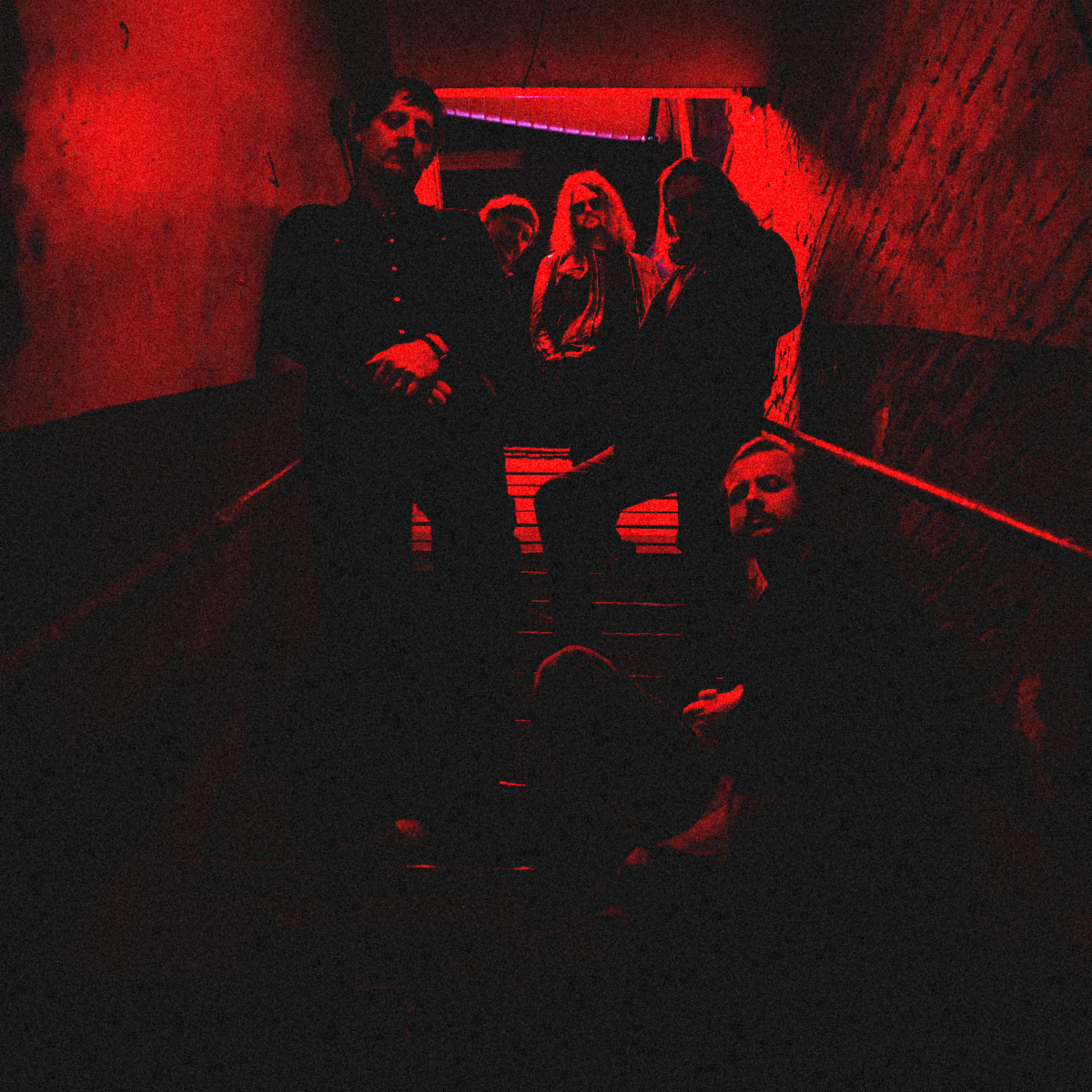
Johnny Blue Skies & The Dark Clouds strode onto the stage to a weighty descending guitar riff that could have come from a doom-metal record. Then the disco ball flickered to life, and Sturgill Simpson laid down a smoky blues-like guitar solo over jazz-inflected chords. The opening then settled into the breezy, funky sway of “Venus,” soon joined by Simpson’s signature country-rich vocal timbre. The sequence served as a fitting prelude for a night in which Simpson and his outfit would meander across a wide array of styles.
Born in Kentucky, Simpson is widely regarded as one of the most compelling singer-songwriters of his generation, even if he shrugs at such distinctions. He possesses a natural vocal gravity, capable of summoning enduring emotion and authority with every hushed or explosive note, and his lyrics often linger as long as his voice. His catalog blends aching beauty, snarling swagger, languid licks, and smoky grooves—an all-encompassing mix of classic rock radio vibes colliding with outlaw country, bluegrass, and a variety of dance-inflected sounds. He excels in many disciplines, and several of them were on display Wednesday in Columbus. The show faltered mainly when he leaned into jam-band rhythms.
The campaign tied to this year’s Johnny Blue Skies album Mutiny After Midnight teased a Mutiny For The Masses tour: “We’re taking the stage in arenas and theaters with a vengeance. No opening act. We’ll seize every minute the venue affords. We’ll rock this Mutiny as hard as humanly possible. It is our privilege and our honor because our fans deserve it.” True to form, they delivered a three-hour marathon Wednesday night at a half-filled Nationwide Arena, leaving ample room to explore Simpson’s strengths and its few weaknesses alike.
This is a man who does as he pleases; defiance has long been his calling card. And right now, he seems intent on opening with a nod to Phish. “Venus” was among several first-hour numbers that stretched into extended, shape-shifting explorations. At roughly the seven-minute mark, a satin-smooth saxophone solo emerged. By the twelve-minute point, drummer Miles Miller injected a double-time groove straight out of an early-2000s dance-punk tune. It was intriguing, yet it didn’t play to Simpson’s strengths the way the bluegrass-flavored “Railroad Of Sin” did, which tore through the room like a runaway train on a moonlit track. If venturing from there into the expansive power-chord terrain of “Fastest Horse In Town” showcased the group’s versatility, the heavy distortion felt unfocused, as if the fireworks were set off without a deliberate choreography.
Mutiny After Midnight was conceived as a tribute to groove, a country-funk spectacle powered by rebellion and desire. The record shines when its tracks stretch to five or six minutes and still feel purposeful, driven by a durable rhythmic heartbeat and well-crafted songwriting. Yet even as the album is pulsing with heat, those addictive cadences propel songs that remain well-made. Early in the night’s second half, the emphasis on craft gave way to more open-ended instrumental voyages that often seemed to travel nowhere. I suspect a section of the jam-oriented crowd saluted the choice to begin with some of the loosest, least focused numbers, but for me it underscored that even when a band is cooking, the recipe still matters.
More compelling was the set’s latter portion, which spotlighted Simpson’s deft songwriting and the Dark Clouds’ keen arrangements. This stretch also brought into focus Simpson’s 2024 release Passage du Desir, the world-weary country-rock statement that introduced Johnny Blue Skies and remains his strongest record to date. The warm, contemplative imagery of the Passage tracks “If The Sun Never Rises Again” and “One For The Road” flowed directly into Simpson’s emblematic 2014 ballad “Turtles All The Way Down.” Then it returned to Passage material with “Right Kind Of Dream,” a gently driving tune elevated by elegant guitar lines reminiscent of a grown-up music box. The romantically charged “Don’t Let Go,” the Mutiny track that most closely evokes Passage Du Desir, closed a suite that displayed Simpson at his most tender without dulling the band’s formidable chops.
As the show moved toward its final act, the Dark Clouds swept through nearly every corner of Simpson’s catalog. The Mutiny cuts “Make America Fuk Again,” “Stay On That,” and “Everyone Is Welcome” came off with riotous energy, and the band rode them long enough to feel thrilling without overstaying their welcome, unlike some earlier forays. The slower, lullaby-like moments “Jupiter’s Faerie” and “Welcome To Earth (Pollywog)” proved Simpson’s knack for writing about mortality and renewal. The towering riff-soaked “Best Clockmaker On Mars” and the rocket-fueled closer “Excited Delirium” demonstrated that “fast and loud” can be as potent a mode for this outfit as “slow and sad.”
And with a dazzling laser-light show that filled the arena, the performance captured the essence of Sturgill Simpson—unapologetic, unguarded, and unrepentant. Perhaps two tight hours would have sufficed, but Simpson does not strike me as a “less is more” kind of artist. These days the Dark Clouds embrace expansive horizons, and whatever criticisms one might level, no one can leave this tour doubting that they left everything on the stage.
SETLIST:
“Venus”
“Situation”
“Railroad Of Sin”
“Fastest Horse In Town”
“Make Art Not Friends”
“Viridescent”
“Living The Dream”
“Last Man Standing”
“Mint Tea”
“All Around You”
“If The Sun Never Rises Again”
“One For The Road”
“Turtles All The Way Down”
“Right Kind Of Dream”
“Don’t Let Go”
“A Good Look”
“Lay Down Sally”
“A Good Look”
“Make America Fuk Again”
“Stay On That”
“Jupiter’s Faerie”
“Everyone Is Welcome”
“Welcome to Earth (Pollywog)”
“It Ain’t All Flowers”
“Best Clockmaker On Mars”
“Life Of Sin”
“Long White Line”
“Mercury in Retrograde”
“Excited Delirium”