God, I used to get so frustrated. I’d catch a fleeting snippet of a track I adored and ache to hear more, yet Girl Talk wouldn’t let me. Suddenly a rapper would lay a verse on top of the song I loved, or a thunderous guitar riff would crash in and derail the moment. The tune I cherished would splinter, and then we’d leap to another track — sometimes one I loved, other times one I loathed. That was the concept. It was the entire pitch. It was why people loved Girl Talk. At the time, I couldn’t bring myself to join in.
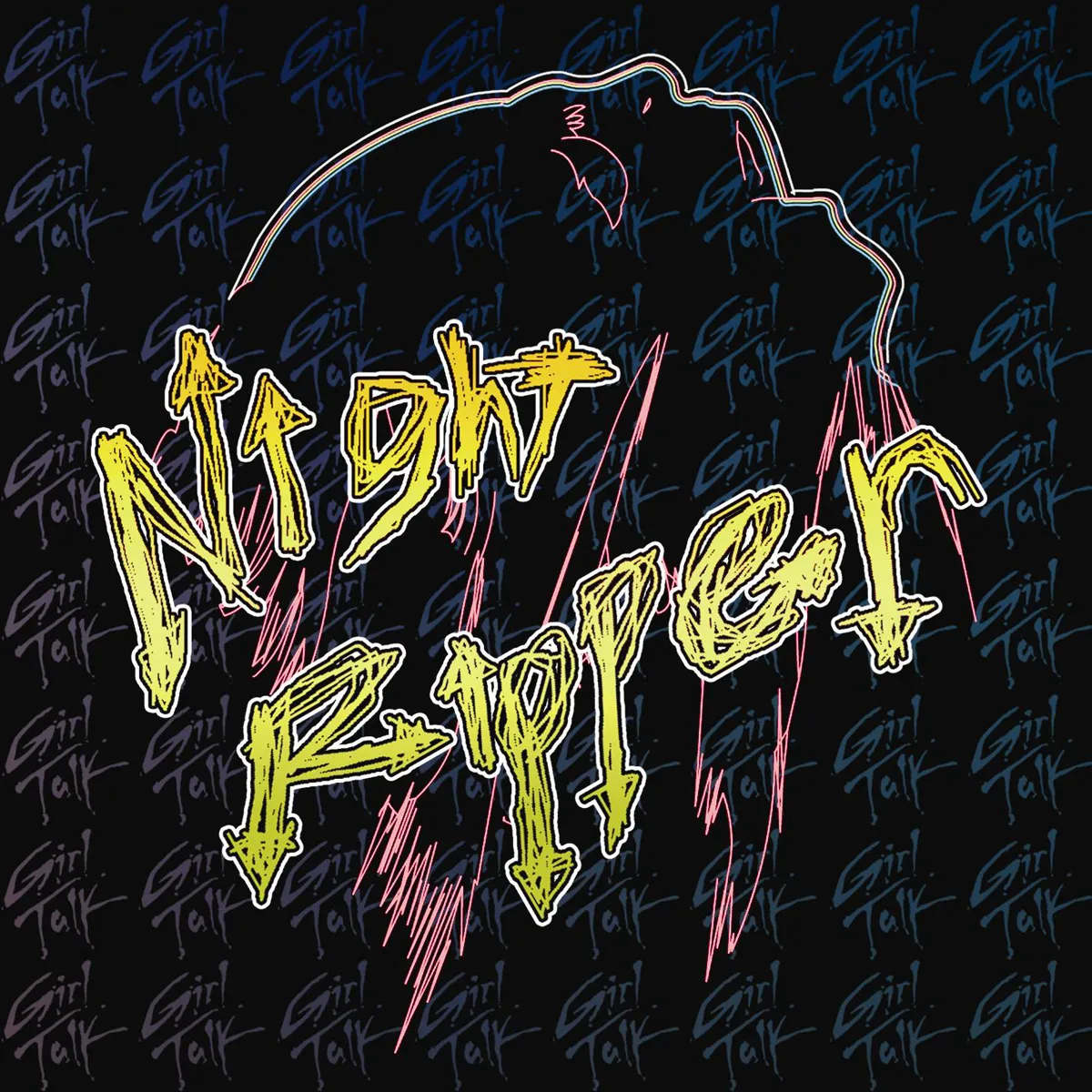
I wanted Girl Talk to be something he wasn’t. Specifically, I hoped he’d be a DJ. He could’ve become a DJ. He possessed the ear and the technical chops. He knew how to spot unforeseen connections, how to flip to a stadium-sized anthem at a moment nobody anticipated. But Girl Talk didn’t use tracks to craft a mood, to sculpt an experience with peaks and valleys, or even to spotlight the greatness of the individual tunes he dumped into the mix. Those were the tasks of a DJ, and Girl Talk wasn’t one. Instead, the splash was the aim — the sheer, overwhelming chaos of all these disparate sonic pleasures, delivered in rapid, jangled succession. Twenty years after the release of Night Ripper, his approach now makes a lot more sense to me.
To plenty of other people, Girl Talk’s method made sense right from the start. He was a sonic extremist, stacking more pieces from instantly recognizable songs than any predecessor. But for decades before Night Ripper, people had been stitching together fragments of old music to forge new sounds — Grandmaster Flash, Negativland, “Pump Up The Volume.” Sometimes, people made record-collage albums to make art, sometimes to fuel partying. Often, you couldn’t tell which motive ruled. Maybe the artists themselves didn’t know, either.
In the early ’00s, the fresh and electrifying mutation of this lineage was the bootleg, or the mash-up. It wasn’t truly novel. Long before, a rap-radio mix show might blend one track’s instrumental with another track’s vocal. In the peak of the AudioGalaxy era, online DJs turned that idea into a craze, layering seemingly random pop hits, often with pun-filled titles. Some mash-ups were a lot of fun. One became a real hit when Richard X, under the alias Girls On Top, put Adina Howard’s randy R&B smash “Freak Like Me” over Tubeway Army’s primitive synthpop grind “Are ‘Friends’ Electric?” The British girl group Sugababes covered that mash-up, and the result topped the UK charts, arguably surpassing either original song it borrowed from.
For my money, the standout product of that mash-up moment was Never Scared, a 2003 DJ mix from Hollertronix, the Philadelphia duo Diplo and Low Budget. Hollertronix built their reputation on hipster dance nights, and they crafted a mix that functioned as a kind of new hipster canon — one that welcomed Southern rap, new wave, Baltimore club, baile funk, and whatever else made sense to them. Hollertronix presented these pieces as parts of a single, unified aesthetic. A year later, Diplo teamed with then-girlfriend M.I.A. for Piracy Funds Terrorism, Vol. 1, the mixtape that helped transform M.I.A. into a left-field cult hero. Never Scared was a proper DJ mix, not a work of art. It was meant to get people moving. Girl Talk wanted to do something akin to that, but I’m not sure it was his primary aim at first.
Girl Talk is Gregg Gillis, a guy from Pittsburgh who’s roughly my age. That means that, like me, he was in college when Napster turned the entire history of recorded music into a free public playground. He began making laptop-based music in the early ’00s after his mind was blown by glitch pranksters like Kid606 and Cex. Those artists adored pop music and pop culture, but they also loved wrecking it. They’d take songs that everyone knew and smear digital noise all over them. At least initially, that’s exactly what Gillis did, too. His first two albums, Secret Diary (2002) and Unstoppable (2004), were stuffed with samples from ultra-famous pop and rap tunes, but he deliberately scrambled those samples, turning the originals into jagged, dissonant blurs.
Night Ripper is disjointed, but it isn’t abrasive. On the album that made him an indie name, Gillis pulled from some of the catchiest parts of songs that were instantly familiar, then arranged the collage so that you’d crave hearing the originals. While his earlier records were acts of artistic vandalism, Night Ripper actually celebrated the hundreds of tracks Gillis mashed together. It’s a deeply affectionate work. You can hear, for instance, Gillis’s obvious love for the crushed-velvet synths of Fleetwood Mac’s “Little Lies” intro, even as he ripped that intro from its context and layered over it the 69 Boyz’ booming dance instructions. Unlike Hollertronix, Girl Talk didn’t present his samples as pieces of a broader aesthetic. His aesthetic was everything, all at once.
In a sense, Night Ripper exploded the mash-up trend by driving it to an extreme beyond its own logic. By the time Night Ripper arrived, a million DJs were posting a million mash-ups on a million sites, and the whole thing had become a drag. Girl Talk’s approach wasn’t completely new, but he outpaced his peers through density alone. The album contains hundreds of samples, some allowed to stretch for nearly a minute and others that appear for a moment and vanish, like Arrested Development’s Speech singing that he’s still thirsty and then never returning. Gillis didn’t always pair vocal from one track with instrumental from another; sometimes three or four samples played at once, forcing your brain to scramble to identify the sources or simply to keep up.
There’s no hint of a cooler-than-thou curatorial posture on Night Ripper. Gillis wasn’t trying to drop obscure material on us. The sprawling chorus of samples included prominent moments from M.I.A. and LCD Soundsystem, rising stars of the moment. Yet he hurled their songs into the same blender as Dem Franchize Boyz, Weezer, and Hall & Oates. It was all the same energy. You hear the “whoop whoop” from KRS-One’s The Sound Of The Police, then the Beatles’ Come Together bass line, then Nelly’s Grillz beat, then the guitar intro from Smashing Pumpkins’ Today; that’s just me transcribing a random minute of what was playing on my speaker as I started typing. Nothing carried more canonical weight than anything else. It was merely a nonstop flood of endorphin-triggering recognitions.
Gregg Gillis assembled Night Ripper in secret. This wasn’t a path to a conventional career for him, or at least not one he planned. After college, he took a lab job at a medical engineering company. Girl Talk existed as a side project, and Gillis never told his coworkers what he was doing. A year after Night Ripper dropped, Gillis reached a level of weekend-warrior live-work income that allowed him to quit his job. Even when he gave formal notice, he still kept quiet about this nocturnal life.
You couldn’t make an album like Night Ripper now, but you couldn’t really make one back then, either. Night Ripper is a copyright-violating party, something that could never be licensed in a million years. Gillis knew this, since he released it, as a download and CD, through the anonymously run Illegal Art. (The label announced last month it’s relaunching after a hiatus since 2012.) He and his collaborators had a full fair-use legal defense planned, but nobody ever sued them. In a 2020 Billboard interview, Gillis implied that nobody wanted to be the one to end the party. Night Ripper somehow still streams on services today, though the same cannot be said of the two subsequent Girl Talk albums that followed.
Night Ripper arrived at precisely the right moment. Girl Talk didn’t find much of an audience for his first two sample-happy records, but Night Ripper struck the collective pleasure centers much harder. My pal Sean Fennessey, now a celebrated movie podcaster, wrote a Best New Music Pitchfork review back when that mattered, and that kicked off a wave of coverage for the project. That was early in my own days as a music critic, and I didn’t quite share the consensus. Night Ripper was too busy. The songs couldn’t breathe. I wrote at the time that “Night Ripper is a truly impressive technical achievement, but the mix never ebbs or flows; it’s just one continuous claustrophobic splooge of reference.” Gillis and I shared nearly identical musical memories, and I didn’t relish the idea of hearing my entire listening history digitally vomited back at me. Today, though, I find it pretty entertaining.
Maybe the past two decades have simply trained my brain to handle such overload — all those hours spent mashing tape by watching the first 30 seconds of a YouTube clip or scrolling through disjointed non-sequitur Reels on Instagram. Night Ripper wasn’t built to endure, but it carries a wild, time-capsule essence today. It’s enjoyable to hear the era’s pop voices in cameo form—your Ciara and Paul Wall and Gwen Stefani and Ludacris—spring into the mix at unexpected moments. And even the clipped, compressed sound quality of that MP3 peak carries its own nostalgic texture, like hearing the line “Atlantic Records for T.I. clearance” on a leaked mixtape track.
Some moments on Night Ripper are genuinely sublime, the most famous being the strangely moving clash of Biggie Smalls rapping “Juicy” over Elton John’s piano from “Tiny Dancer.” I also cracked up hearing the Ying Yang Twins murmur about beating that girl while the dramatic strings of “Bitter Sweet Symphony” swelled. The relentless onslaught of samples acts as a stimulant. I still wish the best moments could last longer. But when I’m on a treadmill, Night Ripper sometimes makes me feel like Mario with an invincibility star guiding the way.
A few months after Night Ripper came out, I went to see Girl Talk at the Mercury Lounge, the tiny New York venue where the Strokes played early shows. Jesse Cohen’s pre-Tanlines dance-punk outfit Professor Murder opened, and they were terrific. Before he began his set, Gregg Gillis grabbed the mic and urged us to have fun instead of worrying about what we’d write about the night on our blogs. I didn’t oblige. Gillis knew it isn’t enjoyable to see someone onstage tinkering with a laptop, so he invited strangers from the crowd to join him in dancing, then went wild to his own mash-ups, which spurred everyone else to imitate. I was pretty drunk that night, but I might have been the soberest person in the room. In those early days, Gillis used to wrap his laptops in plastic wrap because people kept spilling drinks on them.
My first Girl Talk show felt like a fun night out, but it seemed more like a quirky novelty than the spark of a movement. I should’ve foreseen that Girl Talk wouldn’t remain in the Pitchfork orbit for long, that ordinary people might relish his wild montages of mainstream tunes. A year later, he played on the third stage at the Pitchfork Music Festival, and that show was mobbed. People were scrambling up trees and climbing fences just to catch a glimpse. When he moved to larger stages, it wasn’t the jagged intensity of his mixes that drew crowds; it was the pure, unpretentious populism. At a moment when pop and rap in the mainstream felt more thrilling and inventive than indie rock and laptop music, it was uplifting to see a laptop musician embrace those genres with a joyous embrace.
After Night Ripper, Girl Talk built a career. He released two more wildly collage-heavy albums, and he performed in bigger venues than before. When he appeared at Coachella in 2014, a procession of famous guest-rappers joined him to contribute verses to his mash-ups. Then Girl Talk evolved into a regular producer, crafting beats for artists like T-Pain or Wiz Khalifa—the voices who once would have appeared in his mixes. It’s a fascinating development. His later work hasn’t had the same global impact, but how could it? At that singular moment, Girl Talk erected a glittering, junk-art pyramid out of the world’s most popular music. It doesn’t irritate me anymore.