The File on Kevin Drew: Inside Broken Social Scene
July 7, 2026
We’ve Got A File On You features interviews in which artists share the stories behind the extracurricular activities that dot their careers: acting gigs, guest appearances, random internet ephemera, etc.
After a long wait, Broken Social Scene are back. Remember The Humans, the Canadian music collective’s first album in nine years, is slated for release this Friday. A month onward, a tour will follow, taking them across North America and Europe over the year.
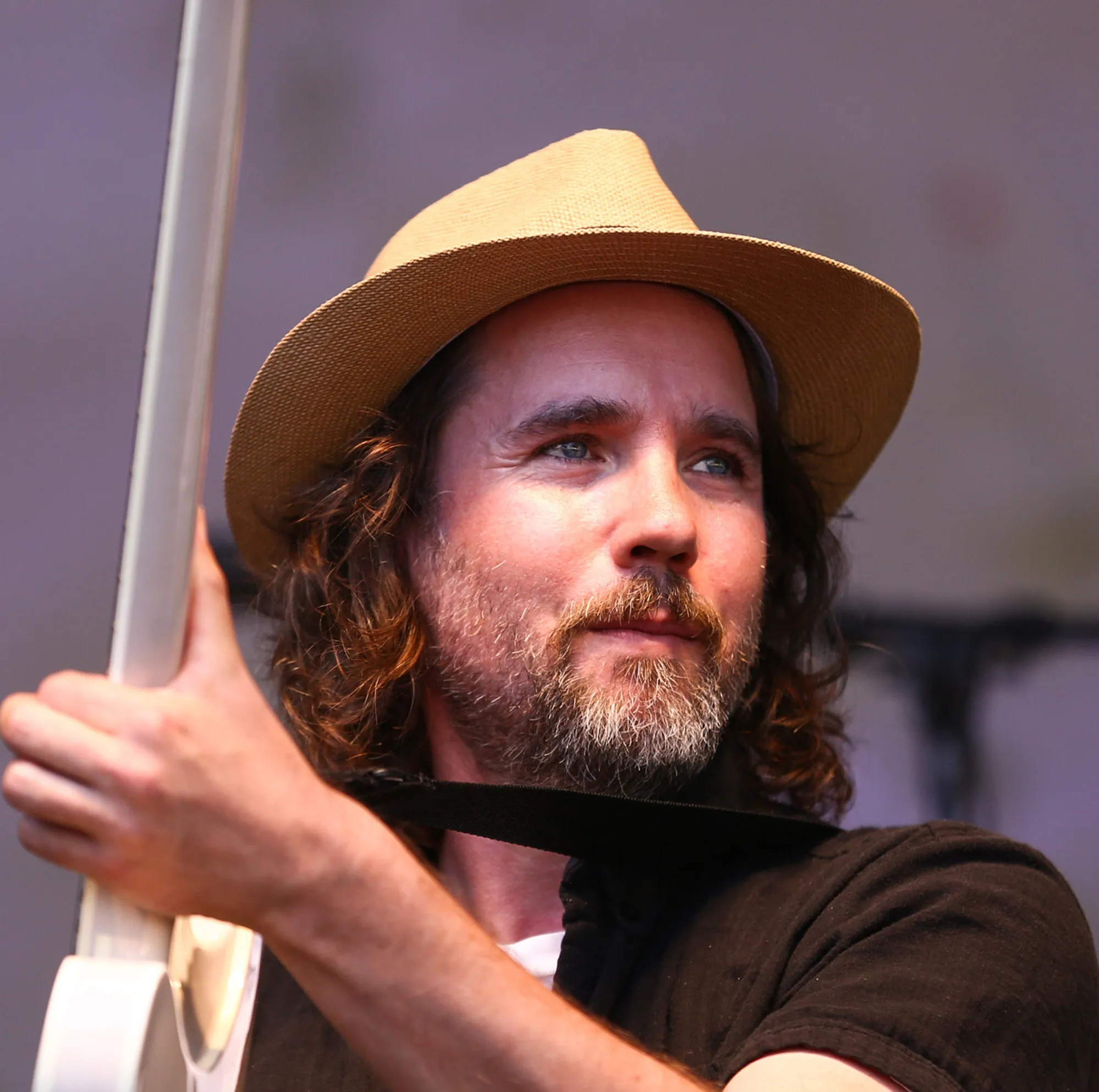
The new record reunites BSS with producer David Newfeld, the engineer behind their era-defining works You Forgot In People (2002) and Broken Social Scene (2005). There are appearances from familiar collaborators like Leslie Feist, Lisa Lobsinger, and Hannah Georgas. The lineup remains as sprawling as ever, a blend of core members and figures within the band’s orbit. Yet if a single face stands out, it’s Kevin Drew—the most consistent frontperson-like presence in a rotating ensemble that he co-founded with Brendan Canning in 1999.
Drew has worn many hats, within Broken Social Scene and beyond. There have been film soundtracks, cameo acting roles, collaborations with living legends, and releases that range from obscure to era-defining. In a long-form video chat we conducted last month, we touched on many of those moments. There were anecdotes galore, featuring Leslie Feist, Gord Downie, Zach Galifianakis, Nigel Godrich, Cillian Murphy, Hal Willner, Eric Bana, Lou Reed, Andy Kim, and more. But first, we delved into the latest project from the band that altered Drew’s life. Read our edited conversation below.
Remember The Humans (2026)
The gap between albums keeps getting longer for this group. Why did this one stretch to nine years?
KEVIN DREW: It wasn’t intended. We don’t aim for such gaps, but life tends to fill the time before the band reconnects… We never operated like a conventional band because so much of this project exists in a realm where you can’t fully control it. People circle back to what we’re doing at their own pace. You need those moments to build your own fortress where you hang posters of yourself on the wall, shield your ego from the outside world, and bow to the altar of “I can do whatever I want.” The downside is that this freedom can become dull pretty quickly, and the melodies lose their glow. So eventually, we all must regroup to acknowledge the irreplaceable chemistry we share, even if we’re reluctant to admit it at times.
Was there a particular timeframe you had in mind for this record?
DREW: We kicked things off in late June 2023. Then my mother passed away, and I put out a small solo record. When she died, I lost my footing for a while, and only after a few months did we return to David Newfeld’s studio. We came together for a handful of days, then went back to Newf’s place for more. It wasn’t until spring 2024, after Newfeld’s mother’s passing, that we decided to take the process seriously and push forward with the album.
We had hoped to finish in 2025, but you know how it goes. We’re not the kind of band that records in two weeks. We drift in and out, and many of these songs felt like a conveyor of raw emotion. David treated us with remarkable patience, letting us discover what we truly wanted. At times, some members would start sending ideas remotely, and I’d insist on staying in a room together. Newfeld, in his gentle way, urged us to let everyone contribute freely. “Just let it all out,” he said, “you never know what might happen.”
Returning required everyone’s presence initially. Everyone had to be in the room, so to speak—“I was there when that part was laid down,” and “I had a say.” Now, the dynamic has shifted to a point where people ask, “Do I need to be there? It seems you’re doing fine.” It’s intriguing—when you need it, it must be your unique signature. And when you want it, there’s a different energy to that. You don’t need to control every detail of compression on a loud head or a snare. There’s a trust in what everyone is doing, and with Newfeld’s return, his childlike curiosity about sound became the guiding force behind the whole project, and it certainly did.
Why revisit the collaboration with him?
DREW: I had moved closer to him, and we’d discussed the possibility of reuniting even before the pandemic. After years of staying in touch, we realized the chemistry was real, and it felt right to explore it again. There’s something about heartache that you can’t choose; it’s a force of nature that the heart wants, often with painful consequences. With David, we all approached the studio from varied backgrounds and beliefs—listening to a broad range of music. We decided to head into an analog world with him, embracing the tactile nature of making records and honoring something tangible in an era of AI chatter that was starting to feel tiresome.
Sorry to hear about your mom.
DREW: I appreciate that. How about you and your family—are your folks still around?
Yes, I’m fortunate. My parents, my in-laws, we’re all nearby, plenty of family dinners and babysitting. It’s a good, grounded situation.
DREW: When I think about the milestones in my life, I get emotional about my mom. Her illness ruptured our family, especially with dementia. It’s painful to watch. I honor those who still have their families and those who endure such losses.
And when David’s mother passed away, there was something profoundly moving about being there with him, offering support and listening to the depth of love and respect. For many of us, mothers were our earliest rhythm—our first drum machine, the heartbeat at the core of life. A partner once described it as the first rhythm, the four-on-the-floor—like a primeval pulse that we all hear. That perspective shaped a certain tenderness in the record—an acceptance of loss that comes with age, and the sadness that can harden a person.
Some listeners felt the record sounded youthful, yet the reality is that the music still carries a youthful spark, while life itself carries the ache of veteran experience. When you’re a kid and you hurt, you cry out. When you’re older, you tend to swallow it, and there’s a stubbornness in learning to endure. The absence of others is a profound, painful thing to come to terms with.
Do these songs channel that kind of release—more like a child letting go than a measured adult emotion? Or are they about holding back?
DREW: In a room with a band, there’s an instant shedding of about a decade in age—an inherent immaturity in the lifestyle. Yet all the songwriters and singers—Leslie Feist, Andrew Whiteman, Lisa Lobsinger, Hannah Georgas, myself, and Ariel Engle—arrived with lyrics that felt cohesive, even though we didn’t coordinate beforehand. It’s striking how the shared concerns stay in the air, even as a collective grows and experiments. The moment of now—how we sleep at night, how the world feels—these are the questions we surface. It’s not naïve to acknowledge pain around us, but the project also honors the possibility of singing and playing together without ignoring what’s happening in the world.
You’ve emphasized a desire for an analog approach, and the title itself—Remember The Humans—can be read as a nod to the AI era, right?
DREW: Charles Spearin gave the project its name, framing it as a lighthearted echo of You Forgot It In People, with us returning alongside Newfeld. He suggested that an AI version of the old record would be called Remember The Humans, and the notion stuck. It’s also a reminder that, for the younger generation, many seem to approach tools with a kind of forgetfulness about the past. Yet we must remember that algorithms are often aimed at us as users, and the punk impulse remains to switch it all off when needed. The AI conversation had become exhausting; the old tech that feels like magic—analog warmth—remains essential to us.
Brick the phone? What’s that?
DREW: It’s a gadget called Brick that blocks your mobile device for certain periods. I haven’t tried it personally, but I’ve seen chatter about it. It’s another paid service, but it effectively bricks your phone for limited windows of time.
DREW: I love the notion of breaking a smartphone’s grip, because addiction is a real issue in society today. I’ll have to check out Brick—thanks for the tip.
Is “Not Around Anymore” meant as an anti-nostalgia statement? It opens the record. Why start there?
DREW: It’s hard to speak for everyone, but the track works well as an opener. It’s about shedding old skins and rethinking what’s left when what you depended on fades away. The music itself—groove, horns, and a sense of joyous release—helps frame the idea of letting go of what’s no longer there and facing where we go from here. It’s a straightforward topic, but it carries a sense of communal resilience rather than intraband conflict.
Is there a particular track you’re hoping fans will latch onto first?
DREW: I’m especially eager for listeners to hear Lisa Lobsinger’s contribution, “Relief.” Lisa wrote a meditative piece, initially thinking she’d hummed a Broken Social Scene tune, then realizing she hadn’t found it. She recorded it and sent us the story behind it, and we were compelled to invite her back. Her return anchors the band, and her fellow women—Emily Haines, Amy Millan, Leslie Feist—have long been part of what we’re about. Lisa gave us a version that let her stand as her own person within the group while we toured together for years. It’s a piece I’m thrilled for people to hear; I haven’t even revisited it since the mastering sessions.
“Not Around Anymore” stands out for me as a balance of groove and the sense of release it embodies. The track is a testament to celebrating what’s still there even as the times shift, and to letting go of what’s gone. I can’t wait for listeners to hear it.
The lineup has evolved a great deal, yet the current band photo still feels astonishingly large. How do you maintain the group’s membership or handle additions?
DREW: The secret is simply that we keep inviting people in. Members drift away, return, and new folks join in. There’s a standing invitation for everyone to participate. That openness can complicate things financially, but it also embodies a powerful principle: friendship is a form of protest in today’s world. The more people involved, the stronger the sense of purpose and continuity. You learn to compromise, extend empathy, and resist the sociopathic impulse of those in power who tell you what to do, eat, or wear. Ten years from now, that won’t be the world we want. Friendship and compassion matter. When I look at a photograph of all these faces, I’m reminded that these are friends who still have the privilege to create together, and I’m grateful for that.
Fucked Up’s “Do They Know It’s Christmas?” Remake Feat. Andrew W.K., Bob Mould, David Cross, Ezra Koenig, GZA, Kevin Drew, Kyp Malone, Tegan & Sara, & Yo La Tengo (2009)
Do you recall that project?
DREW: Not precisely, but I do have affection for Fucked Up. It’s a memory I’m fond of. The rest is hazy—I’ve got dementia in the family, after all. I often worry about whether certain events truly happened or not. I do remember thinking, though, about how incredible it would be to document memories from a specific period and have them tangible again.
Was that collaboration done remotely, or did you work together in person?
DREW: My memory has a few gaps. Dementia can complicate recollection, making you question what you remember. Still, I’ve fantasized about being able to preserve chunks of time—the years 2004 to 2010—as if they could be revived. It would be extraordinary.
That sounds like a Black Mirror episode in the making.
DREW: Exactly. A Black Mirror-style piece where I suddenly realize I participated in that Fucked Up track alongside them.
Pre-Broken Social Scene Band KC Accidental (1998-2000)
Post-rock seemed to be entering a vibrant phase then. How did you find yourselves swept up in it?
DREW: I was an avid Tortoise fan, a devoted Drag City watcher, and a believer in Ninja Tune and Mo’ Wax. The mid-’90s shifted everything: genres crumbled, and the majors began adopting a stripped-down, napkin-sketch version of music’s essence. It was a thrilling era—the first half of the ’90s had opened avenues that felt boundless. But by the latter half, mainstream culture leaned toward boy bands and a sort of gym-rock bravado, with a few exceptions like Björk, PJ Harvey, and Hole breaking through. Hip-hop, though, was thriving—the Beastie Boys, A Tribe Called Quest, De La Soul—they felt vital.
In this ferment, instrumental music began to emerge as a compelling field. Near the end of the decade, I became utterly obsessed with making instrumental work. I met Charles Spearin at a music school; I was around 19, he was about 22. I approached him because I’d heard he liked Tortoise, and he invited me to see his band Do Make Say Think. I went, and I was struck by how they practiced instrumental music as a full band. I approached Charlie with an offer: let’s grab your 8-track, head to my parents’ basement, and cut a record. That’s exactly what we did.
From there, we began to jam with a rotating crew and lean into that instrumental landscape. Do Make Say Think kept rising, as did Godspeed You! Black Emperor, and I found that I had distinct chords and arrangements I wanted to explore in instrumental form. I also brought in James Payment, Justin Small, and other collaborators who would appear on KC Accidental’s second record—eventually folded into one project. It was through this process that I discovered the joy of making music with a diverse community of players, not just those confined to one scene. Brendan Canning’s arrival came when he heard those early recordings and asked to join, and that’s how Broken Social Scene began.
I owe a lot to Do Make Say Think, Charles Spearin, and the label that released our work at the time. Noise Factory Records’ Joe English helped Toronto settle into a scene that thrived on cross-pollination with acts like Mogwai, Low, Aphex Twin, Slowdive, Stereolab, the Beastie Boys, Tribe Called Quest, De La Soul, and Ninja Tune staples. It was a remarkable moment—you’d walk out of a store with a stack of CDs, barely making rent, and that was the mid-to-late ’90s lifestyle.
The track “KC Accidental” on You Forgot It In People—did that begin life as a KC Accidental song that was folded into Broken Social Scene?
DREW: Right after starting Social Scene, we released Feel Good Lost. Among the songs, the vibe of KC Accidental—more in line with that world—stood out, and we still had Broken Social Scene pushing forward. We wanted to honor KC Accidental as a major influence on what You Forgot It In People became, and the riff for that piece came from Charles Spearin. It’s funny how those connections align; Brendan and I were experimenting, and the group’s collaborative spirit allowed that song to survive in the lineup. It feels like a convergence of Charlie and me and the early days before Brendan joined—the name itself then found a natural fit. It’s odd how things line up when creative impulses click, even if it seems unlikely beforehand.
“You In Your Were” Video With Leslie Feist & Zach Galifianakis (2014)
I saw you recently had Zach Galifianakis on your SiriusXM show. How did that friendship begin?
DREW: I’d shot a 13-minute video—“The Water”—for Leslie Feist’s The Reminder, and I’d met Cillian Murphy in 2005. When I saw him again in 2006, I asked if Leslie might be a fan of his work. He said yes, and we decided to pair them for a project about pulling a deceased mother from water and the mystical exchange that follows between father and son. Leslie funded the film, which was a gift I’ll never forget. I always wanted to be a filmmaker, and KC Accidental was a vehicle for that dream.
Later, after Feel Good Lost, Evan Cranley from Stars encouraged me to sing on the project—the idea of a J Mascis, Neil Young, Kermit the Frog vibe with a New Order edge. That became the early vocal direction for You Forgot It In People. Leslie wanted to support my filmmaking, so she backed me in creating that short film.
When the project circulated, someone suggested I interview Zach Galifianakis. I didn’t know who he was, and online access was scarce where I lived. Ten minutes before the interview, I rushed to borrow a computer and looked him up. I found footage of him and Will Oldham singing a Kanye West cover on a farm, and that was my only ammunition. We spoke for nearly two hours, and he even had a delivery of manure on his property during a break. He mentioned a Disney film with gerbils, and then soon after, we learned about The Hangover. I went to see it, and a friendship blossomed. We’ve remained close, as have Leslie and Zach, a testament to the power of friendship and the idea that collaboration can come from generous, grounded people who aren’t chasing status or quick accolades.
And I’m grateful for the friends who’ve achieved a great deal yet continue to bring others along. Many good people stay rooted and remain relatable, and I try to model that in my own work.
That ballroom moment in the video—where you and Leslie sing together—felt almost like a homecoming when it came out. I remember feeling moved, like the old days of reading about Broken Social Scene in college magazines and suddenly seeing Leslie back with you. It felt special.
DREW: We dated briefly, which was painful and transformative in ways I didn’t fully grasp at the time. The friendship endured, and seeing Leslie again—singing “I never got it, but you remember all that you could”—felt like a reuniting of two lives that had struggled to stay aligned. It was a reminder of how relationships shape art and vice versa. We’ve both carried that experience, and it remains a guidepost for how to treat friends who’ve walked the complicated path of love and career together.
That track on the album, with its vocal layering and the sensation of drowning yet remaining certain, still lands with me. It’s a powerful moment of honesty and a tribute to the enduring nature of friendship and collaboration. It’s not about chasing a single, but about honoring the blood and history that bind us, especially when life tests those bonds.
Getting Killed As The Mayor Of Toronto On Law & Order Toronto: Criminal Intent (2025)
How did that part come about?
DREW: I knew the director—he asked me to play the mayor of Toronto and to die at the start. Acting isn’t my favorite thing, but I gave it a shot. The timing happened to line up with the anniversary of my mother’s death, and the character even shared my mother’s maiden name, which felt like a sign. The process was relaxed; I talked with the producers, and it was a fun challenge. Dying at the outset was a strange honor, and I imagined a recurring role, which would have been a thrill, but alas, it wasn’t meant to be.
Did it spark more acting work for you?
DREW: I try to stay open to opportunities. The life of a musician is full of what-ifs, and the possibility of future roles lingers. Yet the exhilarating rush of performing live for thousands of fans is hard to replace, and if I could only pick one path, I’d still choose music. It’s not a failure to have other pursuits; it’s a matter of balancing what you can do and what truly feeds your spirit.
Covering Joy Division’s “Love Will Tear Us Apart” In The Time Traveler’s Wife (2009)
How did you end up in that film?
DREW: We met the director at a dinner in L.A., and he suggested the project. It seemed like a remarkable fit for a wedding scene, and Toronto was the shooting locale. The crew was great, and the experience brought us into close contact with Rachel McAdams and Eric Bana. It was a wonderful, collaborative process, and I remember feeling proud to appear on the big screen, albeit briefly.
You don’t look bloated at all.
DREW: Thanks. The sets offered real food and a chance to mingle with the cast. I genuinely love being on film sets. Do you ever get to work on one?
No, not really.
DREW: The one thing I’ll note is the sadness when a crew member, like the DOP Johnny, passes away after years of taking care of you on set. Johnny looked after me and explained what was happening between takes; that care mattered. He passed away not long after, and I carry that memory. It makes me more grateful for the people who help you realize opportunities and memories that endure beyond the project itself.
It’s all too easy to decline an offer when you need rest at home.
DREW: I explained to the crew that I could only do certain portions of the shoot due to scheduling. One day, a key grip asked who I was and how I managed to rearrange the schedule. I explained, “Guest appearance.” They hadn’t known our band or our work, but the experience was still positive, and Toronto’s film community remains outstanding. I even remember a moment when they told me they’d just won an Oscar for Frankenstein, and the energy was infectious. I love hanging with crews and continuing connections with people I’ve encountered in the industry.
Neil Young Tribute At The Vancouver Olympics (2010)
DREW: That event was a memorial for Hal Willner, who passed away in 2020. Hal produced the tribute, and I had the privilege of performing with Lou Reed, James Blood Ulmer, Elvis Costello, and more, including a duet with Julie Doiron. The two nights of rehearsals and performances were extraordinary, and simply being part of Hal Willner’s world helped sustain my career over the years. Hal would bring us into remarkable projects, and I encourage you to look him up.
I know who he is.
DREW: He was a game-changer for so many artists, and that Vancouver run remains a highlight for me. It was an unforgettable period, and Hal’s influence continued to shape what I did afterward.
That moment also carried a personal loss: a friend who had succumbed to illness, a COVID-related passing that hit close to home. I learned about it while still in the orbit of Hal’s work, and it was a stark reminder of the fragility of life and the importance of celebrating those who’ve supported us along the way.
The weight of losing guiding figures—do you feel that you must assume that role for others as you age?
DREW: It’s a reality that becomes clearer as you grow older. My father remains a steady presence, and I’m fortunate to still have the counsel of people like Andy Kim, who’s a living bridge to an era of great songs and bigger conversations. Andy once spoke about childhood joy and how the playground remains a core source of inspiration. Watching him stay engaged and curious has become a benchmark for me. When Gord Downie’s passing came into focus, and later Eddie Vedder’s presence entered my life, I realized that elder mentors still matter—perhaps more than we expect.”
“Gord left a lasting impression on me, as did the broader Canadian musical community. The relationships we build—those who’ve guided us and those we mentor—define the real legacy. Compassion, empathy, and the willingness to help others remain our most valuable currencies. The music matters because it helps us survive difficult times, and singing together offers solace when news is grim and the world feels like it’s in constant motion.
Guesting On DJDS’ “New Grave” With Wet’s Kelly Zutrau (2018)
How do collaborations of this type tend to come together?
DREW: I was living in L.A., navigating a tough patch in my personal life, and when I visited these two friends’ space, I found new music that resonated. I contributed vocals on several tracks, joined them for rooftop jams, and gradually realized there are moments when people slip into your life and then out again. I have nothing but gratitude for Kelly Zutrau and her collaborator, who’ve remained solid allies and who welcomed me into their world with warmth and respect.
Working With Nigel Godrich And Writing The Songs For Crash And The Boys In Scott Pilgrim Vs. The World (2010)
DREW: This collaboration involved Ohad Benchetrit, Brendan, and myself, with a possible nod to Charlie as well. We envisioned writing a portion of the score for the Scott Pilgrim project under Nigel Godrich. The moment Nigel suggested we come down to London and write together, I realized we should bring Brendan along. The first night in London, we had Joey Waronker on drums and a remarkable bass player. It was a jam that opened doors to something special. Nigel initially wasn’t sure about some directions, but Brendan stepped in and helped guide the process. A learning moment for me: letting someone else push you into a new space can yield the best results. Eventually, Nigel and Brendan found a productive rhythm, and the collaboration clicked. The lesson: don’t keep Nigel Godrich to yourself—let the doors open and flows occur.
That’s a valuable takeaway.
Performing “Sister OK” With Andy Kim On Letterman (2015)
DREW: I performed on Letterman several times, with Hal Willner’s widow, Sheila Rogers, among others present. They believed in the project and supported it as a kind of underdog record. Andy and I explored making remixes in the spirit of Bill Laswell’s work with Miles Davis and Bob Marley, hoping to remix old tapes and push them through new textures. It became clear he wanted to pursue new material, and I opted to create an Andy Kim record rather than chase a traditional path for the group. Andy’s insistence on exploring the playground of making music—rather than chasing a predictable career—taught me a lot about keeping the spark alive. We built the album with Ohad Benchetrit and David Hamelin, and I invited Andy Kim and myself into this creative space, which felt like a fun, intimate process. When I opened the Letterman performance, I’d tried to involve Toronto-based musicians who hadn’t previously performed there, turning it into a proper celebration. It proved to be a testament to Andy’s enduring love for making music and his desire to remain connected to the playground of creativity.
Ageism is real, particularly for Canadian artists, but it’s a mindset you can fight. It’s about recognizing that music is a shared human experience, not a trophy chase. Andy’s persistence and his belief in play remind me that the best art often arises when you’re not chasing the limelight but staying connected to the work and the people who share it with you.
“Anthems For A Seventeen Year Old Girl” (2002)
There’s an enduring arc of this song—the industry still returns to it in covers by Yeule, Ian Sweet, Maggie Rogers with Sylvan Esso, and Toro y Moi’s interpolation. Why do you think it continues to resonate?
DREW: It’s been embraced by the trans community, especially in connection with the film I Saw The TV Glow, which helped popularize the track online. When people use a song to articulate emotions that feel hard to express, that’s the greatest gift you can receive as an artist. The song’s collaborators—Emily Haines and Jimmy Shaw from Metric, Katn Moss on violin, and others—helped sculpt its essence. I’ve learned to acknowledge the power of a song that isn’t mine alone; it belongs to the many who’ve contributed to its life. The broader point is that art, if it’s bound by rigid rules, loses its power. If you’re controlling every move, you’re not living fully. The covers and the way audiences relate to them remind me that’s the essence of art: to be a messenger of others’ feelings and perspectives.
Broken Social Scene – Remember The Humans [LP]
Amazon
Remember The Humans arrives 5/8 via Arts & Crafts.
Clara Weiss
I write about music as a cultural signal, following the artists, scenes, releases, and movements that shape how people listen today. My work focuses on discovery, context, and the stories behind the sounds that travel beyond borders.