Treat it as their entry point. And once you attach that framing to the record in your mind, marvel at a band capable of conjuring something like this on their very first attempt.
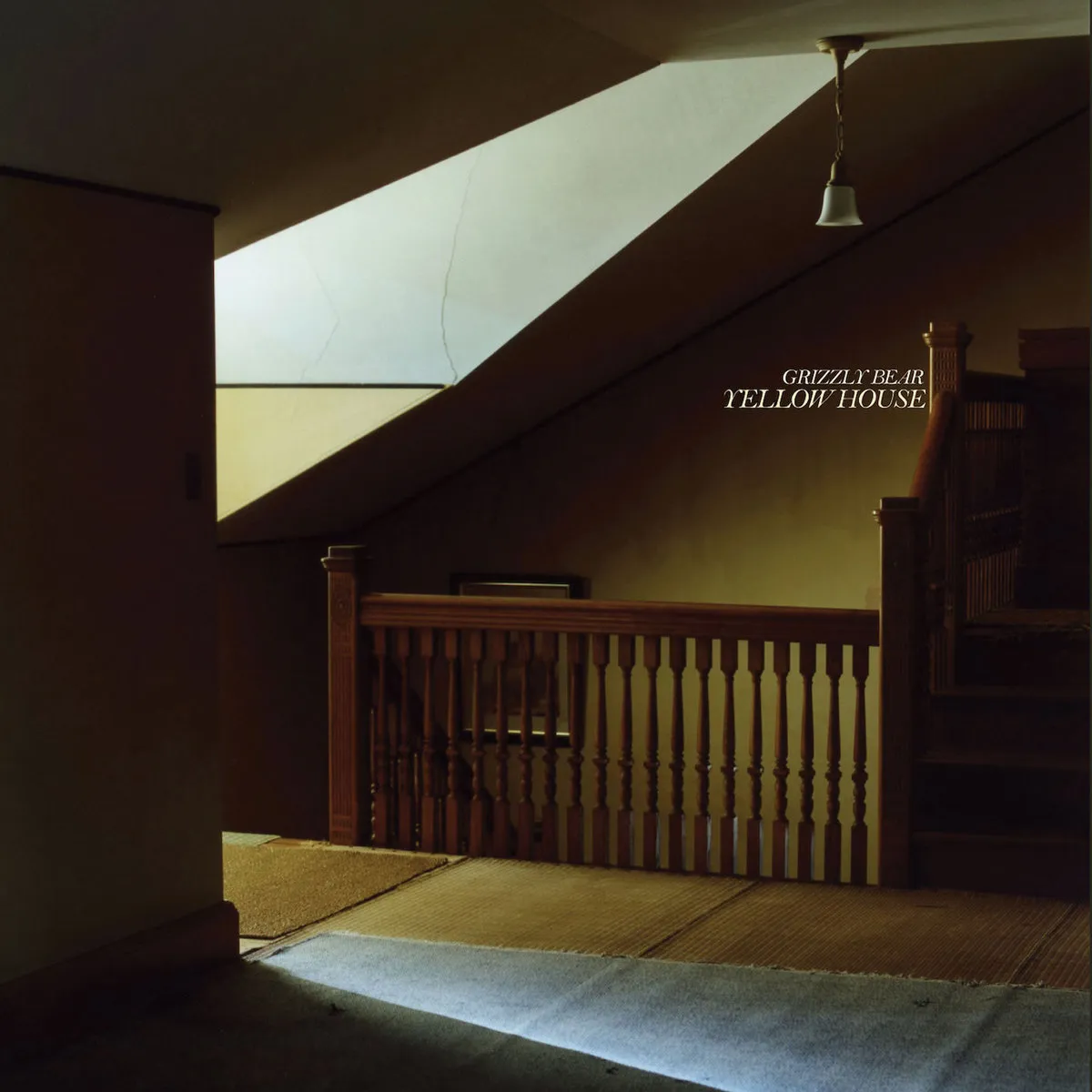
Technically, Yellow House, issued twenty years ago in the UK and the following day in the US, marks Grizzly Bear’s second full-length release. Yet Horn Of Plenty (2004) was largely Ed Droste’s solo project, its lo-fi takes sounding almost like rough demos when set beside the fuller textures the other members would later conjure. The grandeur and polish of these tracks signaled a fresh direction for indie music: rooted in classic pop, rock, and folk but linked to the avant-garde; bred in rock clubs yet perfectly at home in conservatories; expansive and spectral, yet capable of raw immediacy at times. It helped define its era, and two decades on Yellow House feels timeless—aging with remarkable grace.
The Grizzly Bear project grew out of its solitary origins out of necessity. Drummer Christopher Bear had contributed to Horn Of Plenty, but when it came time to promo the record with live performances, the lineup needed reinforcement. Chris Taylor joined first, primarily handling bass but also expanding the band’s reach through woodwinds and electronics, not to mention a knack for production. The final piece was Daniel Rossen, a formidable guitarist who quickly became Droste’s songwriting foil. In that first year of rehearsing and playing together, they began to cohere into a true collective, one of those ensembles where every member counts and the connection feels almost telepathic.
That crystallization peaked in July 2005, when Grizzly Bear gathered to record at Droste’s childhood home near Boston, the yellow house that would lend the record its name. There was no label obligation—their eventual deal with Warp, the experimental electronics hub, would come later—and the band gave themselves a month to finish. The self-imposed deadline could have produced a jagged, incoherent collection, but instead it sharpened their instincts and clarified their aesthetic. From the opening flutter of “Easier” to the closing vocal rounds of “Colorado,” the album reads as the sound of a singular unit in complete command of its powers. They may have forged even stronger albums later, but all the essential pieces were assembled here on the very first try.
Horn Of Plenty had already generated blog buzz and earned broad critical acclaim, and Grizzly Bear was becoming a Brooklyn fixture at a moment when the borough was increasingly seen as indie rock’s epicenter. They were primed for a breakout, and Yellow House delivered beyond expectations. When bloggers such as Stereogum’s Scott Lapatine and Amrit Singh got their hands on the record, the hype train surged forward. “Yellow House is going to be one of your favorite albums of the year,” Scott predicted in a Bowery Ballroom late‑night review a couple of months before release, interspersed with Droste’s informal updates that lent the site a personal blog vibe. When this site premiered the “Knife” video, the post began, “Well, we’ve been drooling over this one for awhile.” The sentiment echoed across peer blogs like Gorilla vs. Bear and Said The Gramophone, where Droste also checked in by SMS. By the time Best New Music arrived, Grizzly Bear had become the vanguard.
Back then I had just left college and perhaps wasn’t fully patient enough to be knocked over by Yellow House’s patient, slow‑burn expansiveness. Not that I was among the skeptics who might call the album the herald of a pretentious Dark Was The Night era and sneer at indie’s drift away from its scrappy punk roots. I enjoyed the record, and I made it a point to see Grizzly Bear perform more than once. But it was Veckatimest’s sunlit, song‑centered “Two Weeks” that truly pricked my ears, and Shields—the most direct, hard‑rocking record in the band’s catalog—turned me into a lifelong admirer. Only with the benefit of hindsight did I realize what I’d missed in ’06 while spinning FutureSex/LoveSounds or Ohio’s own art‑punk groups.
Revisiting it now, it’s simple to understand why Yellow House set fans alight. I’m getting swept up again myself, even as I type. Beneath a veil of reverb that softens every edge, these songs breathe as living, breathing organisms. The hushed passages are hypnotic, and the louder moments burn with a volatile energy that makes you lean in, wondering how these meticulously crafted arrangements can withstand the storm. Rossen’s guitars contribute tremendously, offering both the intricate acoustic textures that anchor the songs and the fierce electric lines that slice through the mix with surprising intensity. The album overflows with instrumental color—banjo, brass, piano, and more—and it often sidesteps standard verse‑chorus patterns, unfolding as if these pieces were whole musical works rather than conventional songs.
“Marla,” a tribute to Droste’s great‑great‑aunt who drank herself to death after following a similar route from Boston to New York, moves with a creeping, smoky bounce that recalls New Orleans funeral jazz. “Lullabye,” with its haunting refrain of “Chin up, cheer up,” begins so softly and builds to an impending, thunderous roar. “On A Neck, On A Spit” follows a comparable arc, taking its time before erupting in ecstasy. Across the tracklist, there isn’t a moment when something beautiful isn’t happening, though the beauty rarely comes in the most obvious form. As Sean Michaels remarked long ago, there’s an interior proximity to the music—close, murmured, intimate—brought outward. Or an exterior wildness—lush, fertile, ripe—brought inward. Things move where they should and often go beyond what you expect.
Crucially, the vocals stand apart. Droste and Rossen’s voices loop and blend in a way that made it hard to tell them apart at first, and once you learn to hear them separately, they play off one another splendidly, with the sharper Droste lines like “Knife” balancing the more expansive, proggy textures found in Rossen’s pieces such as “Little Brother.” The group dynamics deepen when Bear and Taylor join in, so that all four voices crash into one another’s beauty, a harmony that recurs again and again throughout the album.
Those vocal textures invited frequent comparisons to the Beach Boys, yet Grizzly Bear carried that lineage into entirely new, more otherworldly territory—finer, more delicate, but also more unruly. They sounded like mythical creatures a starry‑eyed Sufjan Stevens might stumble upon in one of his orchestral epics, yet the urgency and humanity remained clear. “Everyone tries to label us somehow. We’ve been tagged as folk by a lot of people, but the record is too intricate and shapeshifting to sit in any single box,” Droste told Under The Radar, resisting the easy folk label. “When I think of folk, I picture random Scottish sheep‑shearing songs. I imagine something far more hardcore folk.”
Yellow House makes sense as folk music when you view it within the context of the 2000s indie scene. It reads as a transitional record, a bridge between the untamed psych‑folk of Sung Tongs and the reverential harmonies that would mark Fleet Foxes. In Grizzly Bear’s arc, it sounds like a band coming into its own. If at times the music feels more spiritual than physical, it remains substantial in its own right. If they had stopped here, they would still be the stuff of legend.